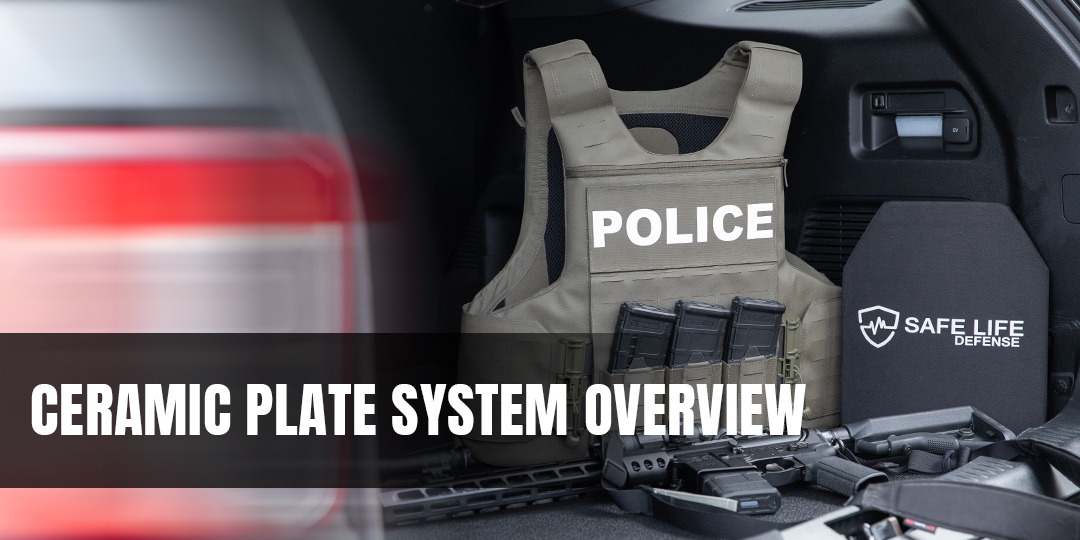
The US military has issued ceramic hard armor since the Vietnam era, and ceramic is the default rifle plate for civilians and law enforcement today.
The reason is simple: ceramic is the only plate material that reliably stops armor-piercing rounds, and it does so without the dangerous fragmentation that makes steel a liability up close.
That protection comes at a real cost in price, weight, and careful handling, and this guide covers all of it, including the buyer traps that get people hurt.
Ceramic body armor, at a glance
| Stops up to | RF3 / Level IV (.30-06 M2 armor-piercing) |
| Weight (10×12) | ~5 to 8 lbs |
| Cost (per plate) | ~$150 to $500 |
| Lifespan | ~5 to 10 years, plus a handling clock |
| Spall risk | None |
| Biggest strength | Armor-piercing protection |
| Biggest weakness |
Can be Fragile; must be handled with care |
If you are still deciding whether you even need a hard plate, start with what a plate carrier is. Otherwise, to understand why ceramic protects the way it does, and why it has to be handled the way it does, start with how it actually stops a round.

How Ceramic Body Armor Works
A ceramic plate defeats a rifle round by being harder than the bullet.
On impact, the hard ceramic strike face shatters and erodes the projectile, spreading the round’s energy across the face instead of letting it punch through a single point.
Behind the ceramic sits a backer that catches the fragments and absorbs the remaining energy, which also controls backface deformation, the force driven toward your body when the plate stops a round.
Two important things fall out of that mechanism. First, ceramic produces no spall. Because it breaks the bullet up rather than deflecting it off a hard face, it does not throw the lateral metal fragments that make bare steel dangerous at close range.
Second, ceramic can take multiple hits across the plate, but it is weaker at the exact same spot, because the strike face has already fractured where it was first hit.
That is the tradeoff baked into the physics: the same brittleness that lets ceramic shatter a bullet is what makes it vulnerable, a theme that runs through everything below. If you want the full side-by-side of ceramic against the spall risk of steel and the limits of polyethylene, we cover it separately.
That strike face is not one single thing. Ceramic plates are built from one of three compounds, and which one you get changes the weight, the price, and the feel on your chest.
What Ceramic Body Armor Is Made Of
Three ceramic compounds dominate modern armor plates, and they line up in a clear order of hardness, weight, and price.
| Compound | Hardness | Relative weight | Relative cost | Typical use |
| Aluminum oxide (alumina, Al2O3) | High (Mohs 9) | Heaviest | Lowest | Most common; budget to mid plates |
| Silicon carbide (SiC) | Higher | Middle | Middle | Balanced performance plates |
| Boron carbide (B4C) | Highest | Lightest | Highest | Military and premium plates |
Aluminum oxide, or alumina, is the most common and most affordable. It is as hard as sapphire (Mohs 9) and very effective against rifle rounds, but it is the heaviest of the three.
Silicon carbide sits in the middle on hardness, weight, and cost. Boron carbide is the hardest and the lightest, and also the most expensive, which is why it shows up in military-issue and premium plates.
The practical takeaway: two plates carrying the same protection rating can weigh and cost noticeably different amounts depending on the compound, so it is worth knowing what you are buying before you compare prices.
It is also worth knowing that modern ceramic armor is a composite system, not a solid slab. Early ceramic plates used a single monolithic ceramic body; modern plates bond a ceramic strike face to a lightweight backer that catches the fragments and controls backface deformation, and that backer choice moves weight and cost too: polyethylene backers are the lightest, fiberglass the heaviest, with aramid in between and now largely phased out.
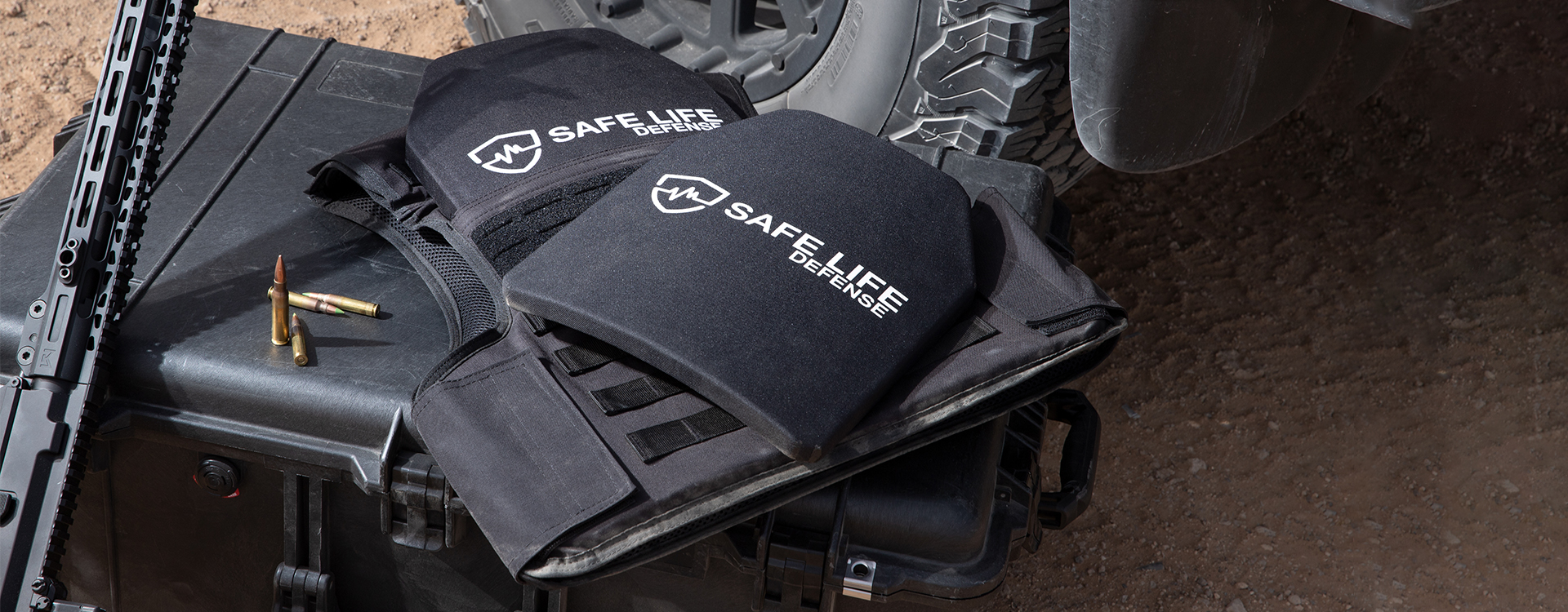
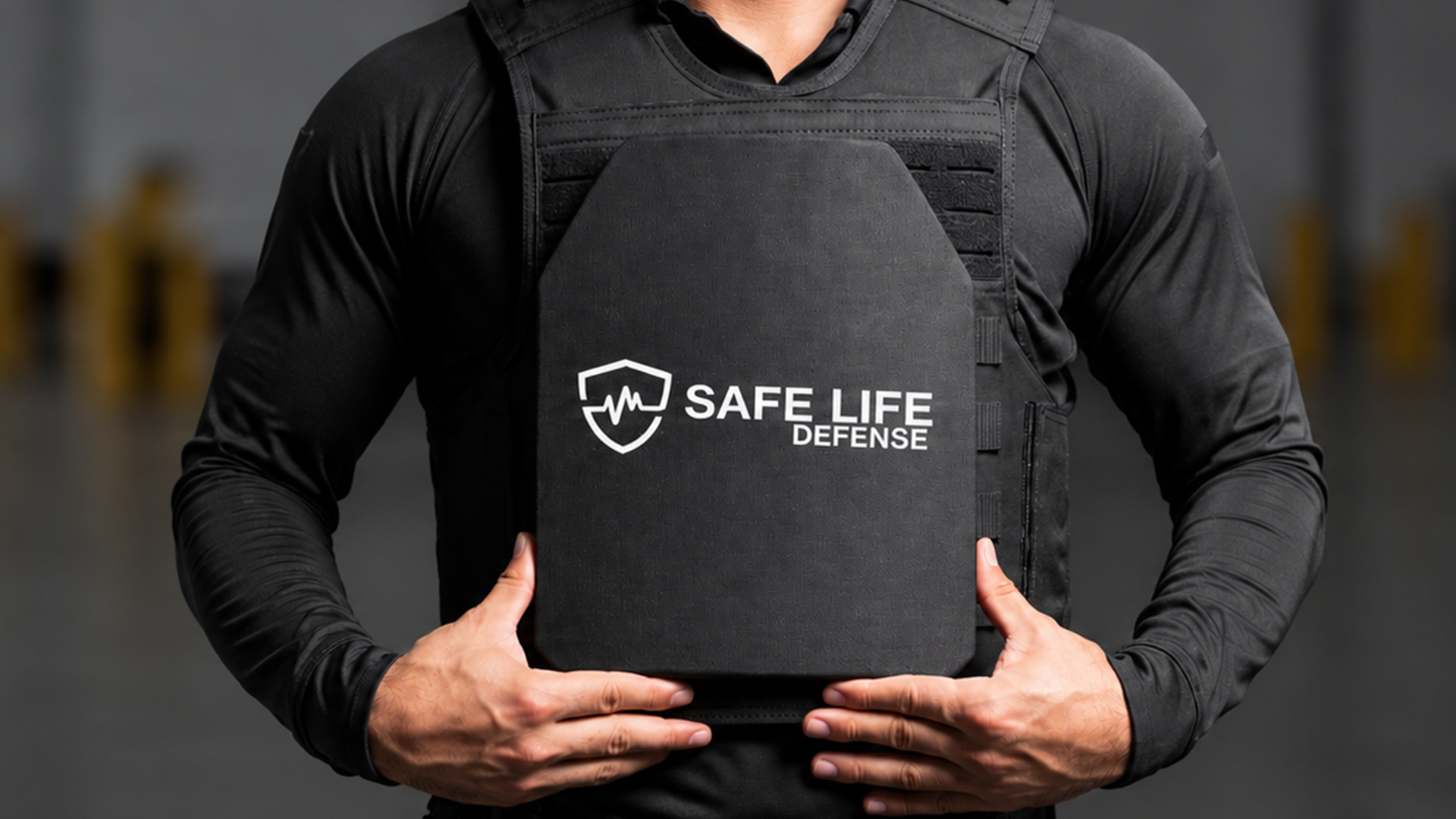
Many modern plates also use a mosaic-tile construction, small ceramic tiles bonded together, which holds up to handling and repeat hits better than single-piece brittle slab. Safe Life Defense Level IV ICW plates, for example, use an aluminum oxide mosaic-tile strike face over a polyethylene backer.
Compound and construction decide weight and price. The level decides what the plate actually stops, and that is governed by a national standard set by the NIJ.

What Ceramic Body Armor Protects Against
Body armor in the United States is rated under NIJ Standard 0101.07, with the exact test threats defined in a companion specification, NIJ Standard 0123.00. For rifle armor, the levels are RF1, RF2, and RF3.
Ceramic can be built across that whole range, but its defining advantage is RF3, the level that replaced the old Level IV.
RF3 is tested against a single .30-06 M2 armor-piercing round at roughly 2,880 feet per second, and ceramic is the only material that reliably reaches it. That is why every Level IV plate has a ceramic strike face: nothing else hard enough is light enough to wear.
For context on the tiers below it, RF1 (the old Level III) covers 7.62x51mm M80, 5.56mm M193, and 7.62x39mm mild steel core, and RF2 adds the 5.56mm M855 green tip.
Treat the old-to-new crosswalk as approximate, because the test rounds, not the names, define the levels.
For the full breakdown, see our guides to Level IV plates and NIJ protection levels.
One distinction matters before you trust any ceramic plate’s rating: standalone versus ICW. A standalone plate reaches its rating on its own.
An ICW plate, meaning “in conjunction with,” reaches its rating only when worn over a Level IIIA soft armor backer that does part of the work, which is how ICW plates stay lighter and thinner.
The safety rule follows directly: an ICW plate worn without its backer is not rated and can fail at its labeled level. Many lighter ceramic Level IV plates are ICW by design, so always confirm which you are buying.
SLD’s Level IV ICW ceramic plate, for instance, reaches Level IV / RF3 against .30-06 armor-piercing rounds when paired with a SLD IIIA or IIIA+ soft backer.
That protection ceiling is ceramic’s whole appeal. It comes with tradeoffs you should weigh with clear eyes.
The Honest Pros and Cons of Ceramic
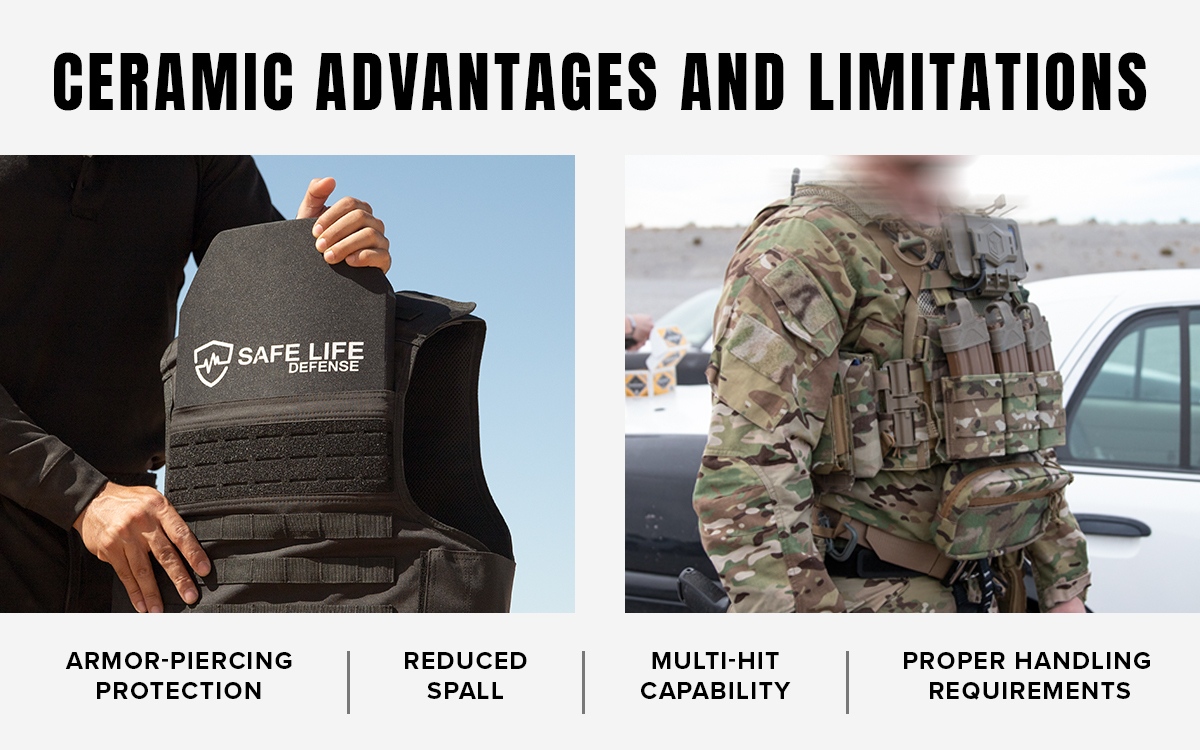
Ceramic earns its reputation. It is the protection ceiling champion, the only material that reliably stops armor-piercing rounds, and it reaches that level at a weight far below what steel would need to attempt the same job.
It produces no spall, and it handles multiple hits across the plate. For maximum protection, nothing else compares.
Now the honest cost. Ceramic is brittle by nature, which is the very property that lets it shatter a bullet, so it is vulnerable to drops and rough handling in a way steel is not.
It has a finite service life. It costs more than steel. And it is heavier than polyethylene. None of that makes ceramic a bad choice.
It makes ceramic a serious one: you are buying the highest protection available and accepting that you must handle and replace the plate responsibly. If you want to see exactly how those tradeoffs stack up against steel and polyethylene, we compare all three side by side.
Two of those cons, fragility and finite life, raise the question buyers ask most: how long does a ceramic plate actually last? The answer has two parts.
How Long Do Ceramic Plates Last, and How to Care for Them
A ceramic plate does not “expire” the way food does, but it has two clocks, and either one can end its service life.
The first clock is age. Most ceramic plates carry a service life of roughly 5 to 10 years, and the warranty is dated from the manufacture date, not the day you bought it. So check the manufacture date, not the purchase receipt, and plan replacement from there.
The second clock is handling. A single hard drop onto a hard surface can crack a ceramic plate internally with no visible damage on the outside, and that hidden crack can quietly compromise the plate regardless of how new it is.
This is why a dropped plate should be inspected or retired, and why a used ceramic plate of unknown history should be treated as suspect.
Put simply: age tells you when to replace a well-kept plate, but rough handling can retire one early.
Caring for ceramic is mostly about respecting that fragility. Store your plates flat or vertically in a dedicated rack, never stacked on their edges or with weight on top of them.
Use padded storage, and keep the plates in a carrier or a protective bag. Avoid storing armor in a vehicle, where extreme heat degrades the materials over time, and avoid damp spaces.
Inspect your plates at least once a year for cracks, delamination, and coating degradation, and remember that a visual inspection cannot reveal internal cracks. An X-ray can, which is how serious users verify a plate that has been dropped or carried hard.
Because lifespan is a real concern with ceramic, the warranty is worth comparing across brands. SLD backs its hard rifle plates with a 10-year warranty, longer than the typical ceramic warranty, along with a 30-day satisfaction guarantee.
Knowing how ceramic lives and dies tells you how to buy it. Here is what actually matters when you are choosing a plate, including the traps.
How to Buy Ceramic Body Armor the Right Way
Start with the trap most buyers never check: coverage. Some 10×12 ceramic plates only provide a protected area of roughly 8×10, with an unprotected border, to cut manufacturing cost.
You pay for a 10×12 footprint and are actually covered on 8×10. Before you buy, verify the plate’s protected area, full edge-to-edge coverage, not just its outer dimensions. When your life is the thing being covered, the difference is not academic.
The second trap is certification language. “Tested to NIJ standards” is not the same as being listed on the NIJ Compliant Products List.
Independent lab testing is meaningful and many honest manufacturers rely on it, but if formal NIJ certification matters to you, verify the specific plate on the NIJ Compliant Products List rather than trusting a marketing phrase.
NIJ levels are laboratory ratings against specific test rounds, not guarantees against every real-world load.
Beyond the traps, a handful of factors decide whether a plate is right for you. Confirm whether it is standalone or ICW, and if it is ICW, make sure you have the soft backer it needs.
Weigh the compound (alumina, silicon carbide, or boron carbide) against your weight tolerance and your budget.
Match the cut and size to your body rather than your shirt, which our plate carrier sizing guide walks through.
Favor a multi-curve plate for comfort over long wear. And consider a trauma pad behind the plate to further manage backface deformation.
All of this assumes ceramic is right for you. For most rifle-threat buyers it is, but not for everyone, and the honest answer includes a lighter alternative.
Who Ceramic Is For (and the Lighter Alternative)
Ceramic is the right call when you need maximum protection, specifically against armor-piercing rounds at RF3 / Level IV, and are willing to accept the weight, cost, and careful handling that come with it.
That covers SWAT, high-threat roles, armor-piercing threat environments, and anyone who simply wants the highest protection ceiling available.
Ceramic also makes an excellent modular upgrade rather than a permanent burden: SLD builds low-profile pockets into its soft armor so you can wear IIIA or IIIA+ soft armor daily and slide a Level IV ICW ceramic plate in only when the threat rises.
If your threat does not include armor-piercing rounds and your priorities are weight, comfort, and full coverage, you may not need ceramic at all.
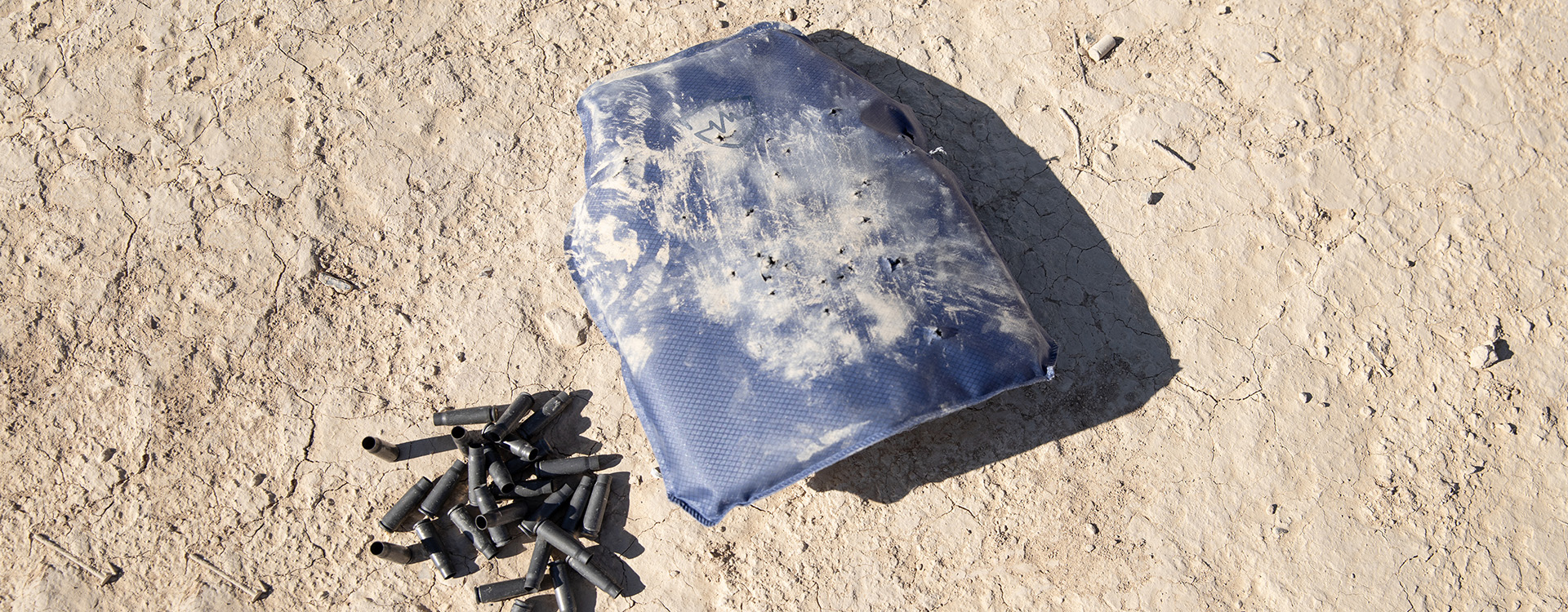
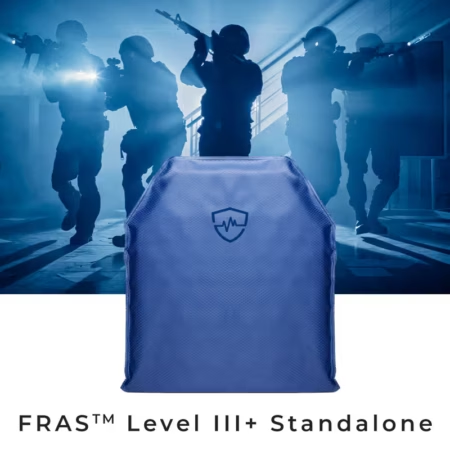
Flexible rifle armor, built from mosaic tiles that bend with your body, wraps your entire torso, produces no spall, and stops green-tip-class threats at RF2, without ceramic’s fragility.
The honest tradeoff is that it is not a path to RF3 armor-piercing protection, where ceramic still rules.
Choosing the lighter option when it fits your threat is not a compromise, it is matching the armor to the mission.
The Right Ceramic Plate, Matched to Your Threat
Ceramic gives you the highest protection available, the only plate material that reliably stops armor-piercing rounds, and it does so without spall.
The price of that protection is real: more cost than steel, more weight than polyethylene, and a plate you have to store and handle with respect.
Buy it for the right reasons, verify the coverage and the certification, and care for it, and it will do its job.
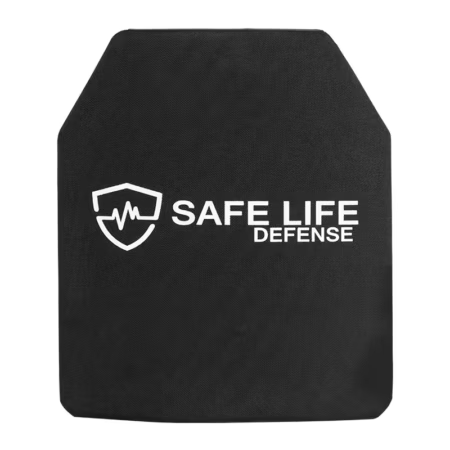
Safe Life Defense’s Level IV ICW ceramic plate is a working example of everything in this guide: an aluminum oxide strike face over a polyethylene backer in a mosaic-tile build, 5.8 pounds, curved for comfort, available in 8×10 and 10×12, multi-hit, reaching Level IV against .30-06 armor-piercing rounds when paired with a IIIA or IIIA+ soft backer, and backed by a 10-year warranty.
Slide it into the pockets of your soft armor when the threat rises, and you have an armor system that scales with the mission. Explore the full plates collection, or the lighter flexible rifle armor if armor-piercing protection is not your requirement.

 Your Cart
 Product Protection from SLD