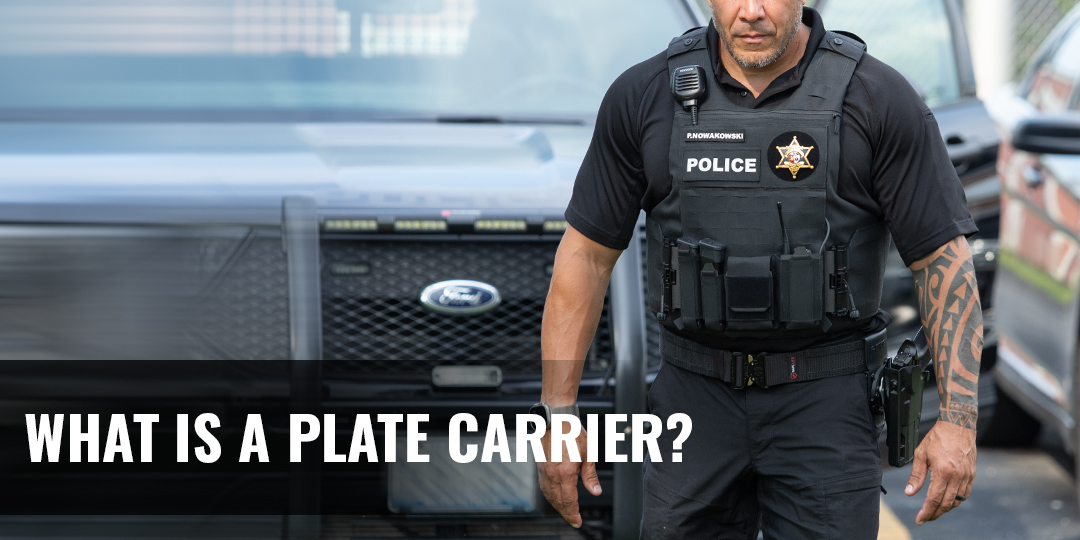
A plate carrier is a tactical vest built to hold hard armor plates over your chest and back. The carrier positions and secures the armor. The plates are what stop the rounds. Worn empty, a plate carrier offers no ballistic protection at all. It also carries mission-essential gear through different attachment methods(i.e. molle webbing, swift clips, g-hooks, ETC.).
That last point is the one most explanations skip, and it is the key to understanding everything else on this page. We build body armor for police officers, security professionals, and citizens who take preparedness seriously, and the single most common point of confusion we see is people treating the carrier and the armor as one object. They are not. Once you separate them, the rest of the topic falls into place quickly.
What a Plate Carrier Actually Is (The System, Not the Object)
Here is the distinction that trips up almost everyone new to body armor: a plate carrier is not armor. It is the thing that carries armor plates.
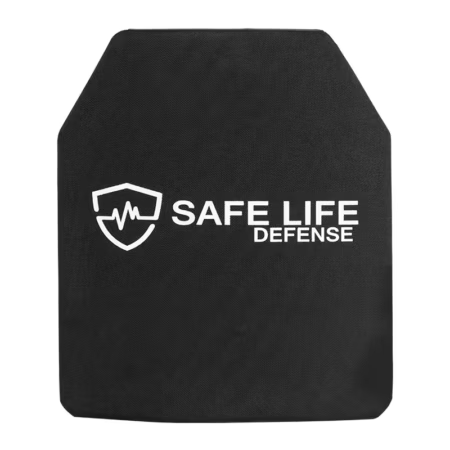
First is the carrier, a vest of nylon and webbing with pockets cut to a plate’s shape. Second is the armor, the rigid plates or soft panels that actually defeat a round.
The carrier holds the armor in the right place on your body. The armor does the protecting. Pull the plates out, and what is left organizes gear and stops nothing.
That is not a technicality. It is the whole mental model. It is also why a bare carrier is sometimes called a “slick” and sold as a standalone shell, and why our own carrier listings say it in plain language: the carrier provides no protection without panels installed. Buy the shell, skip the plates, and you have bought a load-bearing vest, not body armor.
So a plate carrier has two jobs. The first is to position your armor over the parts of you that cannot afford to be hit: the heart, the lungs, and the major vessels packed behind your sternum, the region often called the cardiac box.
The second is to serve as a platform, a place to mount the magazines, medical gear, and tools you need within reach. The armor inside can be hard (rifle-rated plates) or soft (concealable panels), and which one you run changes the weight, the protection, and the way the whole thing wears. We will get to what goes inside. First, the shell itself.
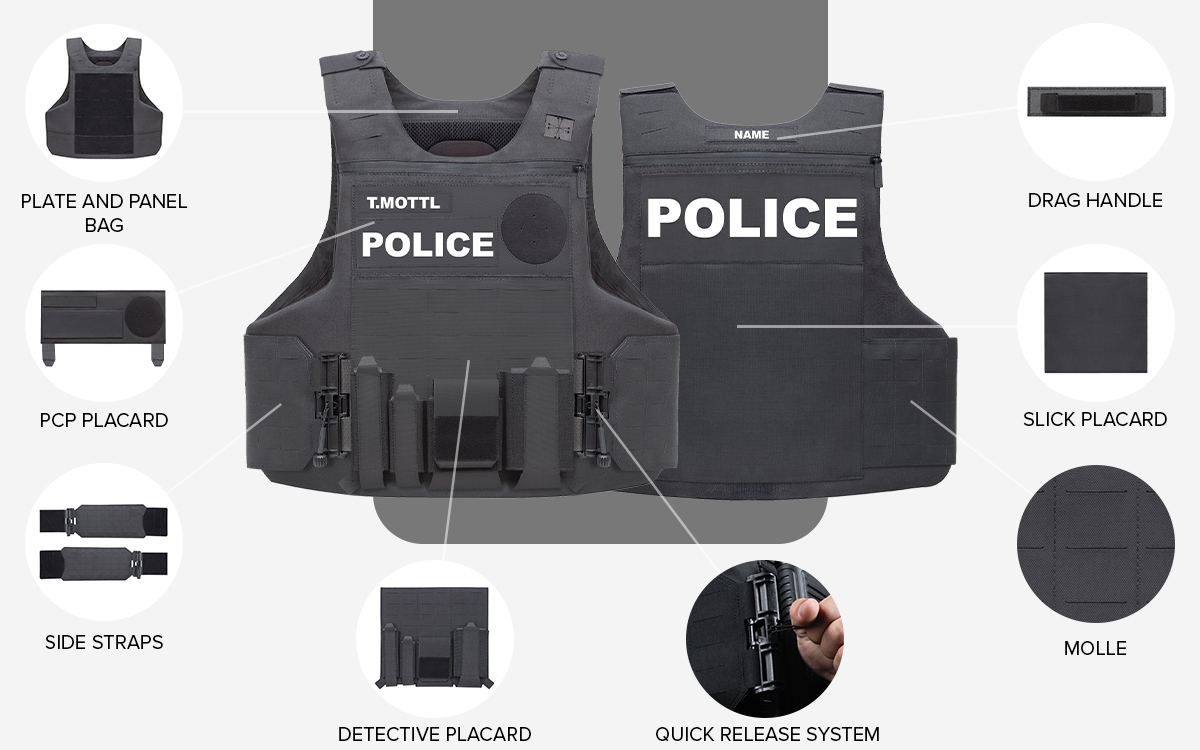
The Anatomy of a Plate Carrier
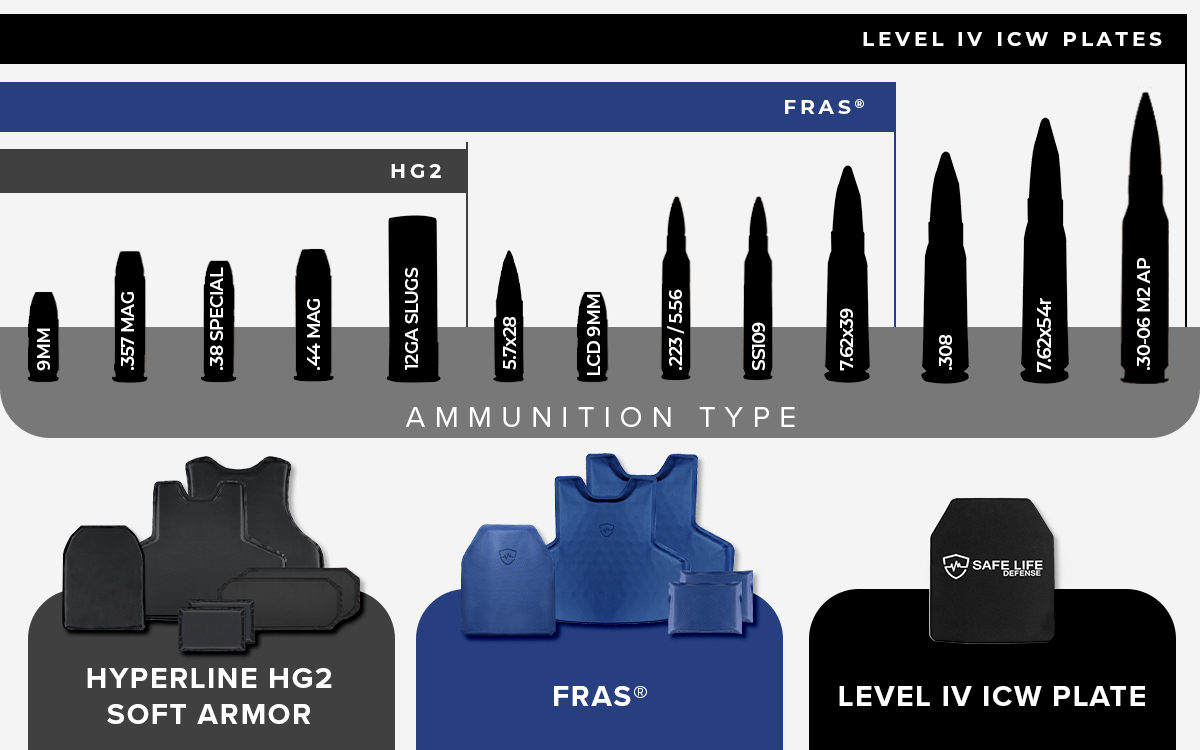
What Goes Inside: Armor Plates and Soft Panels
What the ratings mean. Both plates and panels are rated by the National Institute of Justice, the research arm of the US Department of Justice. The system changed in late 2023. The older standard, NIJ Standard 0101.06, used the familiar Levels IIA through IV.
Its replacement, NIJ 0101.07, uses HG1 and HG2 for handgun protection and RF1 through RF3 for rifle protection. You will see both on labels today, and both are legitimate. We break down every level, and how the old names map to the new ones, in our guide to NIJ protection levels. For this page, the point is simpler: the level or code tells you exactly what the armor was tested to stop.
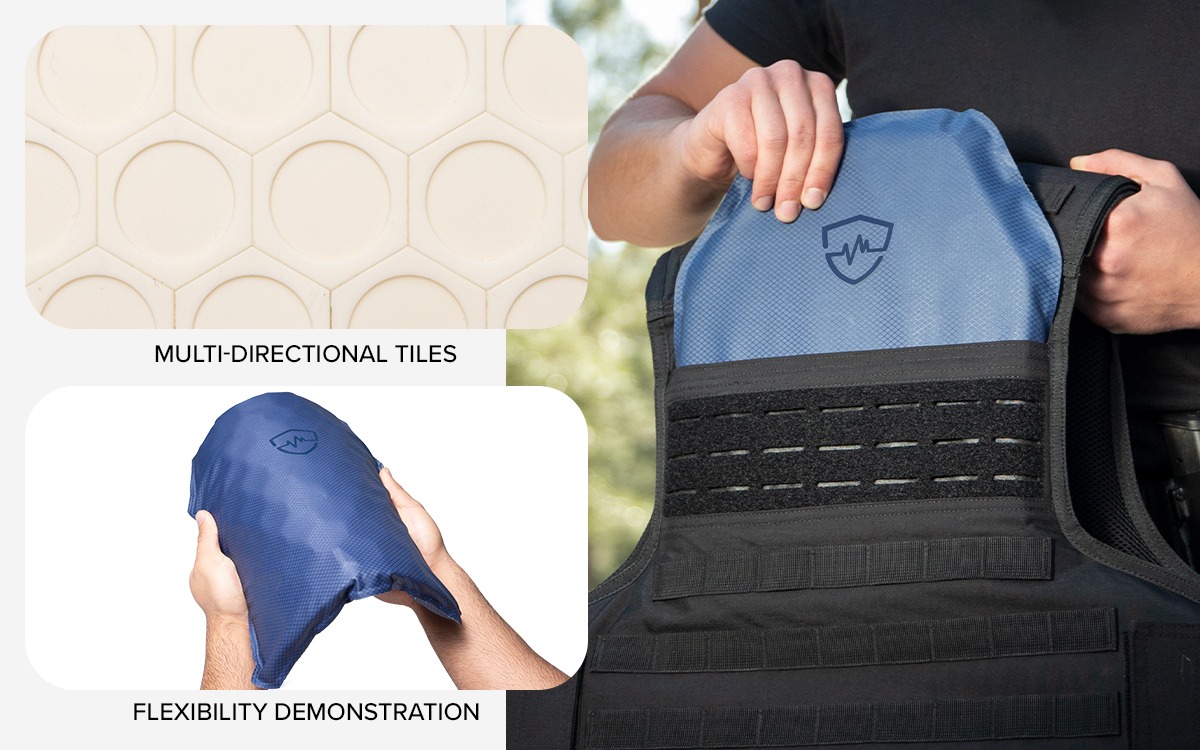
The exception worth knowing. One assumption runs under everything above, that rifle protection has to be a rigid plate. That is no longer strictly true. Our flexible rifle armor (FRAS) is rifle-rated protection in a flexible form factor that wears more like soft armor, which changes the comfort math on a long shift.
At the concealable end, our Hyperline Level IIIA is a thin soft panel. The Enhanced Multi-Threat IIIA+ adds protection against certain armor-piercing handgun rounds along with stab and strike threats. And at the top, Level IV ICW plates are rated to stop armor-piercing rifle rounds. Which one belongs in your carrier is a threat question, and our soft armor vs hard armor guide walks through it.
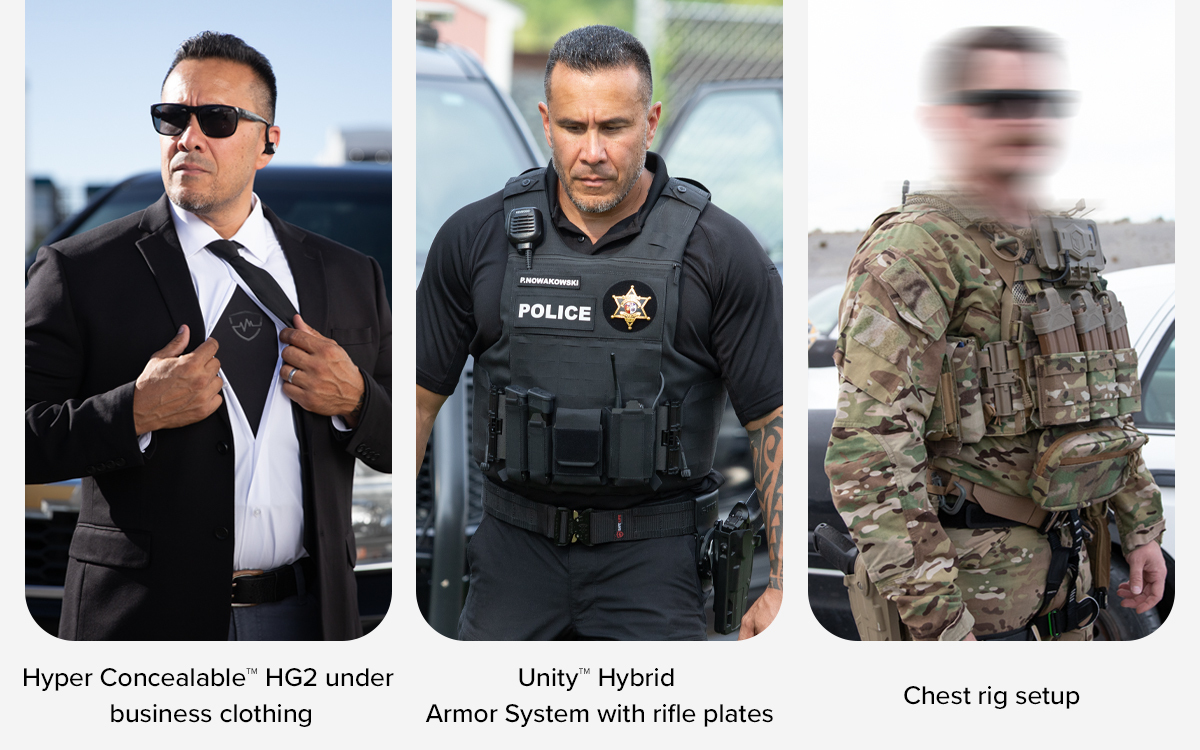
Plate Carrier vs. Bulletproof Vest vs. Chest Rig
Three pieces of gear get confused for one another, partly because they can look similar from across a room. They answer three different questions.
| Bulletproof vest (soft armor) | Plate carrier | Chest rig | |
| What it is | Soft armor panels | A shell that holds hard plates (or panels) | A gear platform, no armor |
| Threat it stops | Most handgun rounds | Rifle rounds, with rated plates | Nothing on its own |
| How it is worn | Concealed under clothing | Usually overt, over clothing | Over clothing, or clipped to a carrier |
| Primary job | Discreet, all-day protection | Rifle protection plus gear | Carrying magazines and gear |
A concealable vest, the soft armor most people mean when they say “bulletproof vest,” often answers the question “I want protection nobody can see.” It is rated for handgun threats and light enough to wear all day under a shirt
A plate carrier answers “I want rifle protection, and I can wear it openly.” It holds hard plates, weighs more, and carries gear on the outside.
A chest rig answers “I just need to haul magazines and gear,” and this is the one that catches beginners.
A chest rig holds no armor at all. It is webbing and pouches. Worn alone it offers exactly zero ballistic protection, though many clip onto the front of a carrier to add capacity.
There is a coverage trade buried in here. A plate carrier protects the areas its plates cover, no more. A wrap-style soft vest covers more of your torso, but only against handgun threats.
That is why many professionals run both: soft armor worn daily for the constant handgun threat, and a plate carrier staged and ready for the rifle threat that is rarer but far more lethal. The two are not rivals. They solve different problems.
For the deeper version of this decision, our soft armor vs hard armor guide compares them head to head, and if your question is specifically about gear-carrying rigs, our plate carrier vs a chest rig breakdown goes further.
Types of Plate Carriers
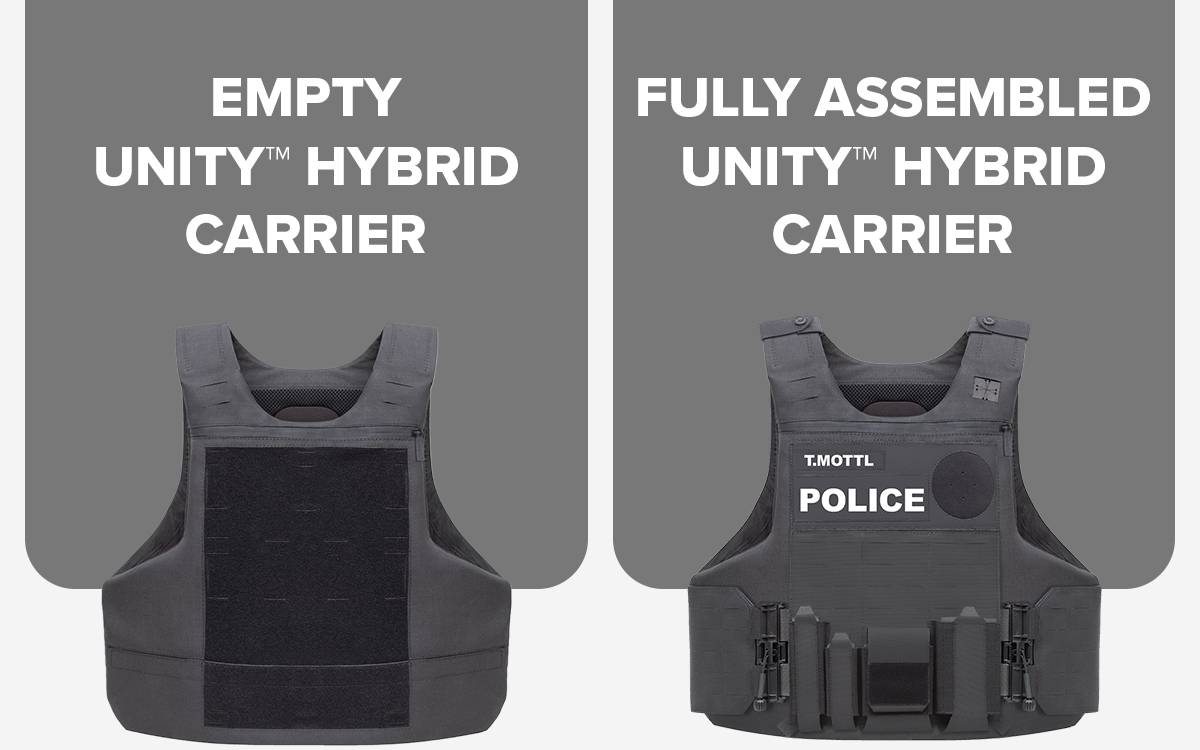
Plate carriers are not one thing. They run a spectrum from nearly invisible to fully loaded, and where a carrier sits on that spectrum tells you who it is for.
This is the overview. For the full breakdown of each family and how to pick yours, see our guide to the types of plate carriers.
Who Uses a Plate Carrier, and Do You Need One?
Plate carriers began as military equipment and stayed there for decades. They have since spread to law enforcement, security work, and prepared citizens, for the same reason in every case: a rifle threat that a soft vest cannot answer.
Here is who wears one, and why.
- Military personnel wear them because a rifle threat is constant, not occasional. Protection and sustainment gear ride together on one platform.
- Law enforcement officers increasingly stage a carrier in the patrol vehicle. The rifle threat is event-driven, an active shooter or a barricaded suspect, so the carrier lives ready to throw on over the uniform in seconds rather than worn all shift.
- Security professionals use them for visible deterrence and protection on static or high-risk posts, often with identification patches front and back.
- Prepared citizens keep one staged at home as a fast answer to a worst-case intrusion: on the body in about ninety seconds, then back in the closet.
Do you need one? That comes down to a single honest question: what threat do you actually face? If the realistic risk in your life is a handgun, a concealable soft armor vest will serve you better than a carrier, because you will actually wear it.
If rifle defeat is a real part of your threat picture, or your role calls for visible protection, a plate carrier with rated plates is the right tool.
Resist the urge to chase the highest number. A multi-hit rifle plate often serves a real-world threat better than a single-hit armor-piercing plate that adds weight you will feel for twelve hours.
The best armor is the one you will wear when it counts. If you want help matching a threat profile to a protection level, our body armor guide walks through it.
How a Plate Carrier Should Fit
A plate carrier only protects you if it sits in the right place, and the two checks below catch most of the mistakes. This is the short version. Our full guide to setting up a plate carrier covers plate insertion, gear placement, and role-specific builds.
Plate height: the sternal notch. The top edge of your front plate should sit at your sternal notch, the small hollow at the base of your throat where your collarbones meet.
Set there, the plate covers your heart, lungs, and the major vessels above them. The instinct to wear plates low to “cover the stomach” is the most common fitting error there is. It trades away heart coverage for nothing the plate was built to do.
Quick check: tuck your chin, and it should just reach the top edge of the plate.
Cummerbund/Side Strap tension: the flat-hand test. Tighten the cummerbund until you can just slide a flat hand between it and your ribs, but not a fist.
Snug stops the carrier from bouncing when you move. Strangled stops you from breathing. The whole rig should not shift more than about an inch in any direction.
One more principle prevents a lot of regret: size the carrier to the plate, not to your shirt. Coverage of your vital organs is what matters, so the plate that covers them decides the carrier you buy. When you are ready to choose, our carriers are built around standard plate sizes, and from there the setup guide takes you the rest of the way.
Are Plate Carriers Legal?
Body armor, including plate carriers and the plates inside them, is legal for most adults in the United States. The details matter and vary by state, so here is the accurate version for 2026. This is general information, not legal advice. Verify your own state’s current law before buying.
Build From the Right Place
A plate carrier is a system, not a single object. The carrier holds the armor, the armor protects you, and the right build comes down to the threat you actually face. Start with what you need to stop, then work outward to the plates, the carrier, and the setup. Safe Life Defense builds carriers, flexible rifle armor, and the modular Unity system for the people who wear armor for a living and the citizens who would rather be ready than caught short.

 Your Cart
 Product Protection from SLD