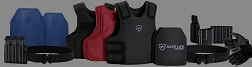
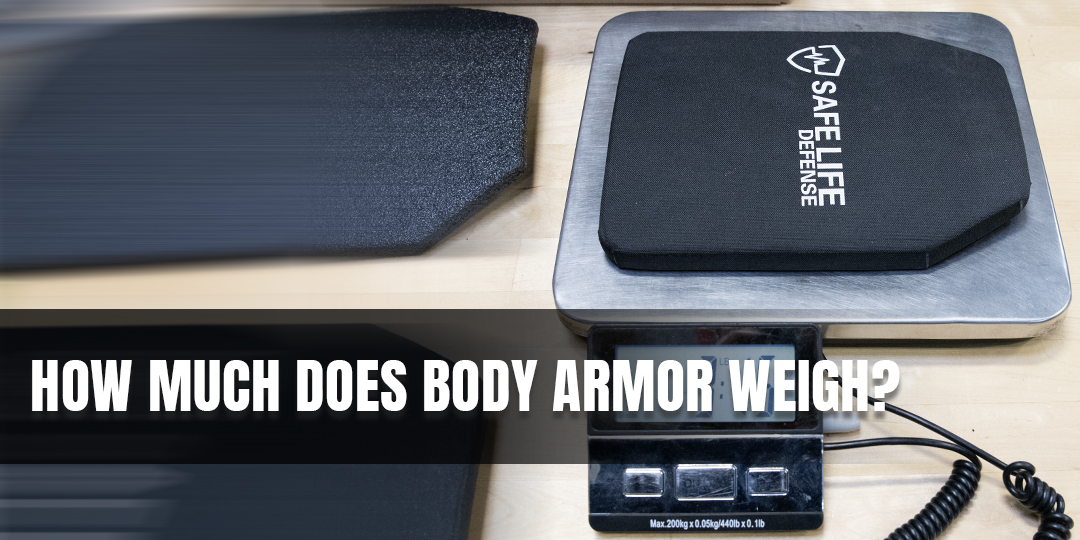
Body armor weight falls into three regimes. Concealable soft armor vests run roughly 3 to 8lbs depending on size and are built for all-day wear.
Rifle plate systems run roughly 8 to 23 pounds as worn, meaning two plates plus a carrier, depending on material and protection level.
Full military loadouts with armor, helmet, and attached equipment run 25 to 40 pounds.
Within each regime, material and protection level can move the number by a factor of two or more. The exact figures, and the reasons they vary, are below.
What a Soft Armor Vest Weighs
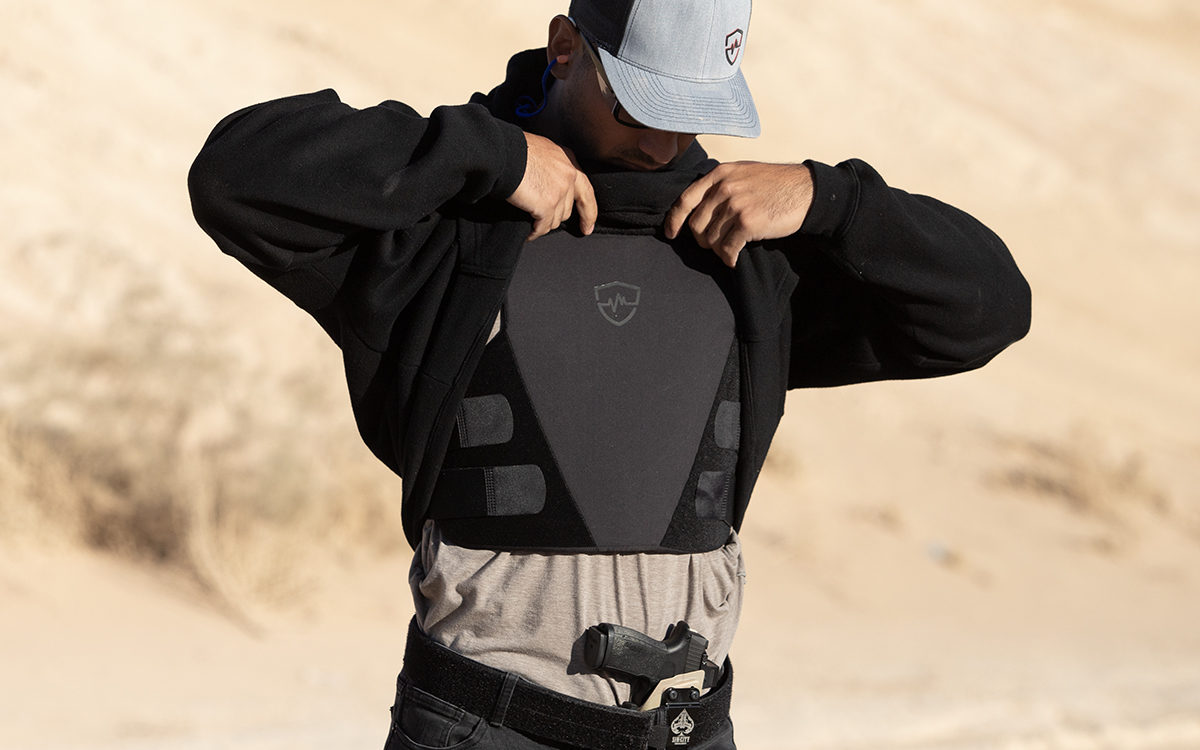
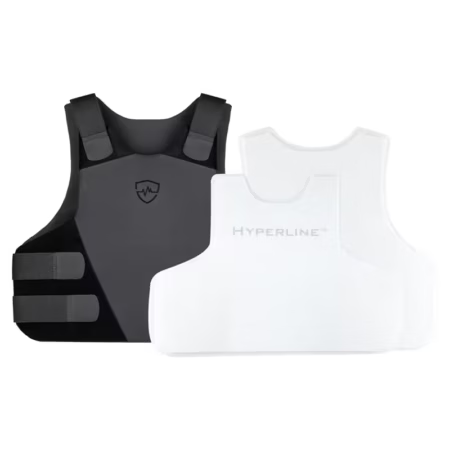
A complete concealable soft armor vest, panels plus carrier, typically weighs 3 to 8 pounds. The ballistic panels themselves account for roughly 1 to 2.5 pounds each, with the carrier, straps, and any side coverage making up the rest.
Minimalist single-panel setups can dip near 2 pounds, full wraparound vests with front, back, and side coverage sit at the top of the range. This is the weight class built for wearing all shift, every shift, which is why most police officers spend their careers in it.
Two things move the number more than buyers expect. The first is your own size: the same vest model can span nearly 2 pounds between its smallest and largest sizes, because a bigger torso simply requires more ballistic material.
This is why honest manufacturers quote weight ranges or per-panel figures rather than one flattering number, and why a “4-pound vest” claim means little without knowing which size was weighed.
The second is coverage: a front-and-back vest and a wraparound vest at the same protection level are different amounts of armor, and they weigh like it.
Protection level matters less here than you’d think. Level II panels are somewhat lighter than Level IIIA, but within soft armor the gap is measured in ounces per panel, not pounds.
What the levels actually mean for protection is its own subject, covered in our guide to NIJ protection levels.
Soft armor is the lightweight class. The moment rifle protection enters the conversation, the numbers change character, and the difference is measured in whole pounds per plate.
Hard Plate Weights by Level and Material
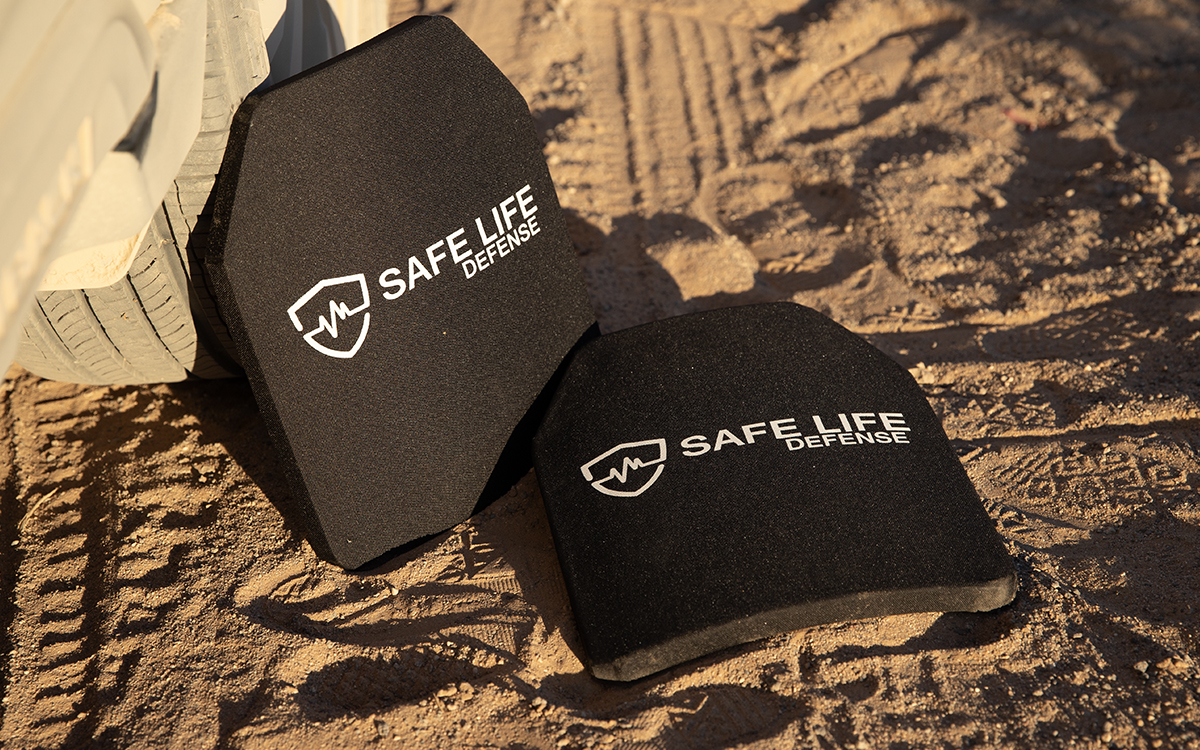
Rifle plates run from under 3 pounds to around 10 per plate, and the single biggest factor is not the protection level. It’s the material. Here is the full picture in one table, with every figure a verified market range:
| Item | Typical weight | Front + back pair | Notes |
| Soft armor vest, complete | 3 to 8 lbs | n/a | Panels plus carrier, scales with size |
| Soft armor panel alone | 1 to 2.5 lbs each | 2 to 5 lbs | IIA to IIIA class |
| Hard IIIA-class plate | under 1 to 2 lbs | 2 to 4 lbs | Handgun-rated hard armor, the lightest plates made |
| Polyethylene rifle plate (Level III / RF1 class) | 2.6 to 4 lbs | 5 to 8 lbs | The lightweight rifle option, thicker than it is heavy |
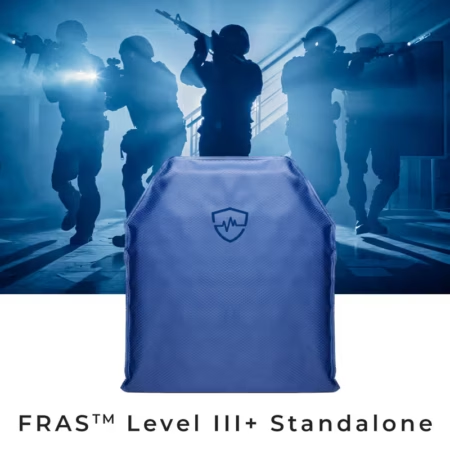
| Flexible rifle armor (FRAS Rifle Plate, 10×12) | 3.97 lbs | ~8 lbs | Standalone-rated for common 5.56 and 7.62×39 threats, bends like soft armor |
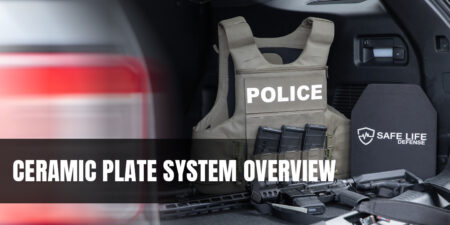
| Ceramic composite rifle plate (Level IV / RF3 class) | 5 to 8 lbs | 10 to 16 lbs | Our Level IV ICW Hard Rifle Plate: 5.8 lbs |
| Steel rifle plate (Level III / III+ class) | 8 to 10 lbs | 15 to 20 lbs | The heaviest option, full picture in our steel body armor guide |
| Plate carrier, empty | 1 to 4 lbs | n/a | Minimalist to full-featured tactical |
| Complete two-plate system, as worn | 8 to 23 lbs | n/a | Plates plus carrier, assembled below |
Read the table vertically and the pattern is unmissable: at rifle ratings, polyethylene is the lightweight, ceramic composite is the middleweight, and steel is the heavyweight, with roughly a threefold spread between the lightest and heaviest way to stop a rifle round.
The pair math matters more than the per-plate number, because almost everyone wears two: whatever a plate weighs, double it, then add the carrier.
A pair of 3-pound polyethylene plates and a pair of 9-pound steel plates are both “rifle protection,” and they are 12 pounds apart before you’ve packed a single magazine.
Two clarifications on the labels. The level names above are the legacy NIJ designations still used on most product listings, the current standard renames the rifle tiers RF1 through RF3, and our guide to NIJ protection levels maps the two systems.
And which material you should actually choose involves more than weight, including cost, durability, and thickness, which is the subject of our steel vs ceramic vs polyethylene comparison.
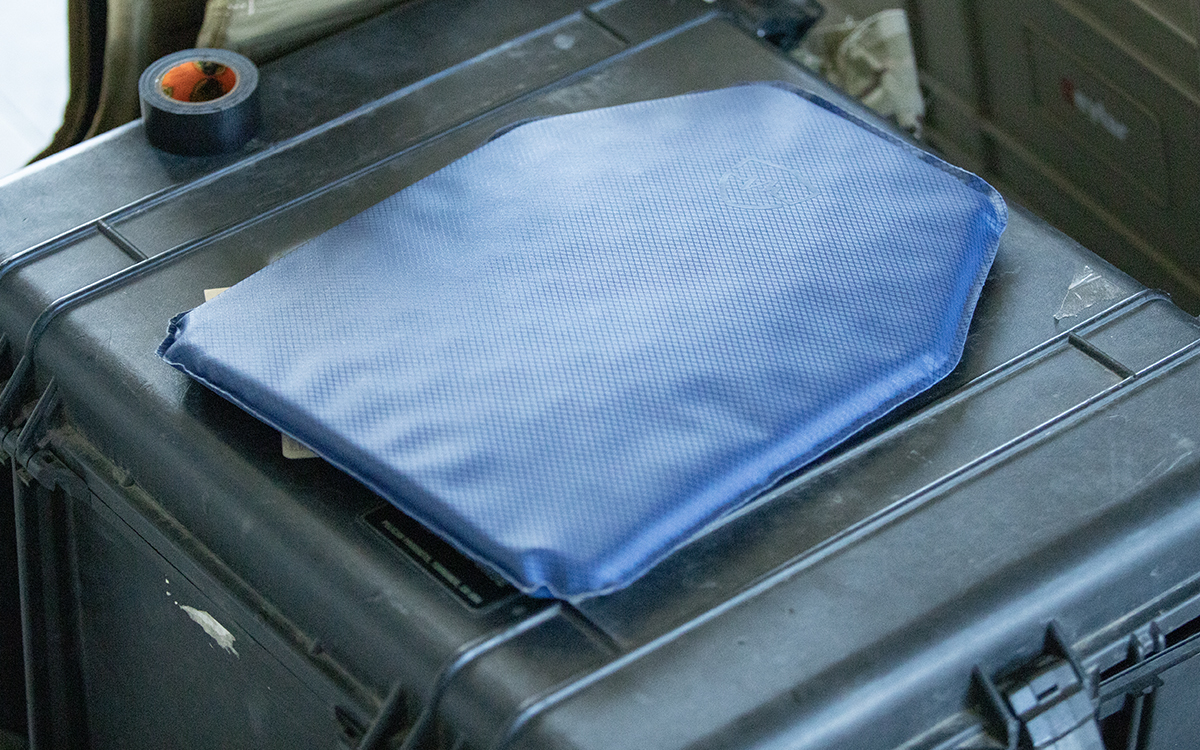
Why Identical Protection Levels Weigh Differently
Two plates can carry the same rating and differ by 3 pounds because armor isn’t rated by weight, it’s rated by what it stops.
The metric manufacturers actually design against is areal density: how many pounds of material it takes to cover one square foot at a given level of protection.
Every material has its own answer to that question, and the differences compound across the area of a plate or a vest.
Three levers move the number at any fixed rating. Material is the big one. Stopping the same rifle round with polyethylene, ceramic composite, or steel takes very different amounts of mass per square foot, which is the entire reason the table above spreads threefold at the same job.
The certified threat list is the second. A plate rated against additional special threats beyond its base level carries additional material to earn it, protection is bought in ounces.
Size and cut are the third, and the most overlooked. A 10×12 plate is 120 square inches of armor, an 11×14 is 154.
That’s 28 percent more area, and at the same areal density, roughly 28 percent more weight from nothing but dimensions. A shooters cut trims the upper corners and trims their weight with them.
For a sense of what a published areal density looks like in practice: our Hyperline Level IIIA material is NIJ 0101.06 certified at 0.9 pounds per square foot and 0.19 inches thick, so a front-and-back set covering roughly 3 square feet of torso carries under 3 pounds of ballistic material.
Run the same arithmetic on any armor whose maker publishes the figure, and the vest weights above stop looking like marketing numbers and start looking like geometry.
The buyer takeaway is one rule: compare weight at a rating, never weight alone. A lighter plate at a lower rating isn’t a saving. It’s a different product.
Plates and panels are only part of what you carry. The system has a weight of its own.
Carriers and Complete Systems
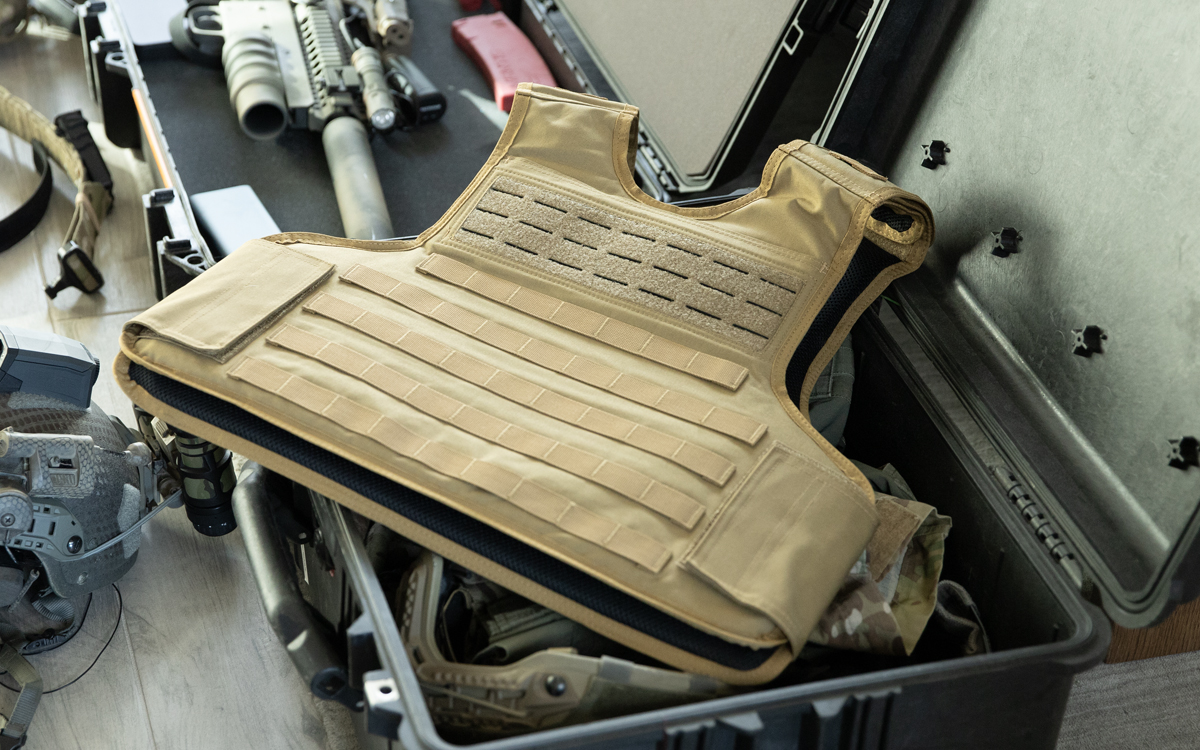
The carrier is the forgotten weight. An empty plate carrier runs 1 to 4 pounds: minimalist designs with little more than plate pockets and straps sit near the bottom of that range, and full-featured tactical carriers with cummerbunds, admin panels, and rows of attachment webbing sit at the top. That’s before a single piece of armor goes in.
Assemble the system once and the regimes from the top of this page turn into real numbers. Two polyethylene rifle plates in a minimalist carrier: roughly 8 to 11 pounds as worn. Two ceramic composite Level IV plates in a tactical carrier: roughly 14 to 19 pounds. Two steel plates and a carrier: roughly 18 to 23 pounds. Same job description, protection for your vitals against rifle fire, at three different costs to your shoulders.
Then comes everything the carrier exists to carry. Loaded magazines, a radio, hydration, an individual first aid kit, and a few pouches routinely add 10 pounds or more, which means a working duty or patrol setup can weigh double its bare-armor figure. That’s how a 15-pound armor decision becomes a 30-pound back decision, and it’s the bridge to the military numbers two sections down.
Which carrier to buy and how to set it up are their own subjects, covered in our guides to choosing a plate carrier and plate carrier sizing. For this page’s purposes, the carrier is 1 to 4 pounds you’re wearing either way. Budget for it.
Those are the typical numbers. The next question is how far below them certified armor can actually go.
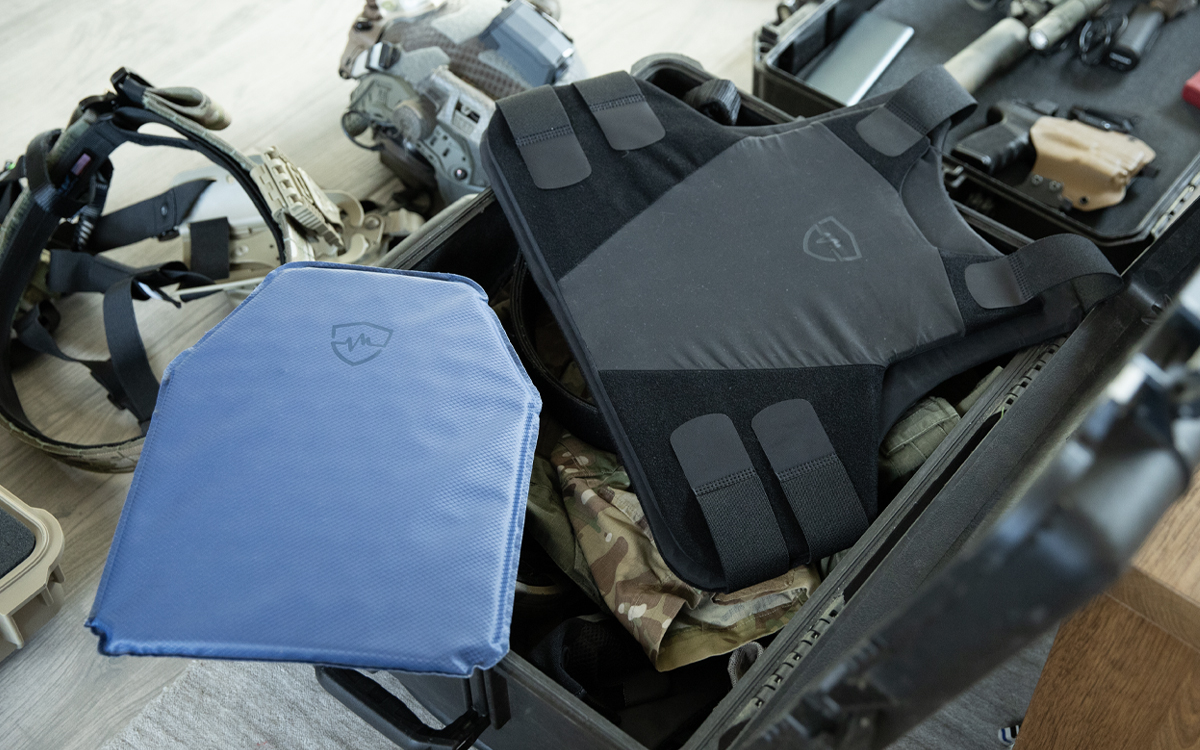
How Light Can Body Armor Get?
Lighter armor exists at every level than most buyers realize, and every pound saved is paid for somewhere else. Here are the verified weight floors across the market, and what each one costs:
| Category | Lightest verified class | What the low weight costs you |
| Soft armor panels | around 1 lb per panel | Handgun-rated only, coverage per panel is modest |
| Hard IIIA-class plates | under 1 lb | Handgun-rated only, rigid, unlike soft panels |
| Special-threat rifle plates | roughly 2 to 2.5 lbs | Tested against specific named rounds, not certified to an NIJ level, you’re trusting the threat list, so read it |
| Polyethylene Level III / RF1 class | roughly 2.6 to 3.3 lbs | Thickness (around an inch or more), heat sensitivity, and price above steel |
| Level IV / RF3 class | roughly 4.5 to 5.5 lbs | Price, plainly, the lightest certified Level IV plates cost more than standard ones |
Two honest readings of that table. First, the lightest genuinely rifle-rated products on the market are the special-threat plates, and their row carries the most important caveat on this page: “tested against M193 and M855” is a narrower promise than “certified Level III,” even when both claims are true. Whether that promise fits your threat model is exactly the question their spec sheets answer, if you read them. Second, the certified Level IV floor has been falling for years as ceramic and polyethylene composites improve, but as of this writing it sits in the 4.5 to 5.5 pound class, not lower. A listing offering “Level IV” dramatically below that deserves the same scrutiny as any outlier claim: check it against the NIJ Compliant Products List before believing it, the same habit we recommend for any armor purchase.
Every figure above is a floor, not an average. Typical products at each level run heavier, and the master table above has those numbers.
Civilian armor keeps getting lighter. Military armor tells the opposite story, and the reason is coverage.
What Military Body Armor Weighs
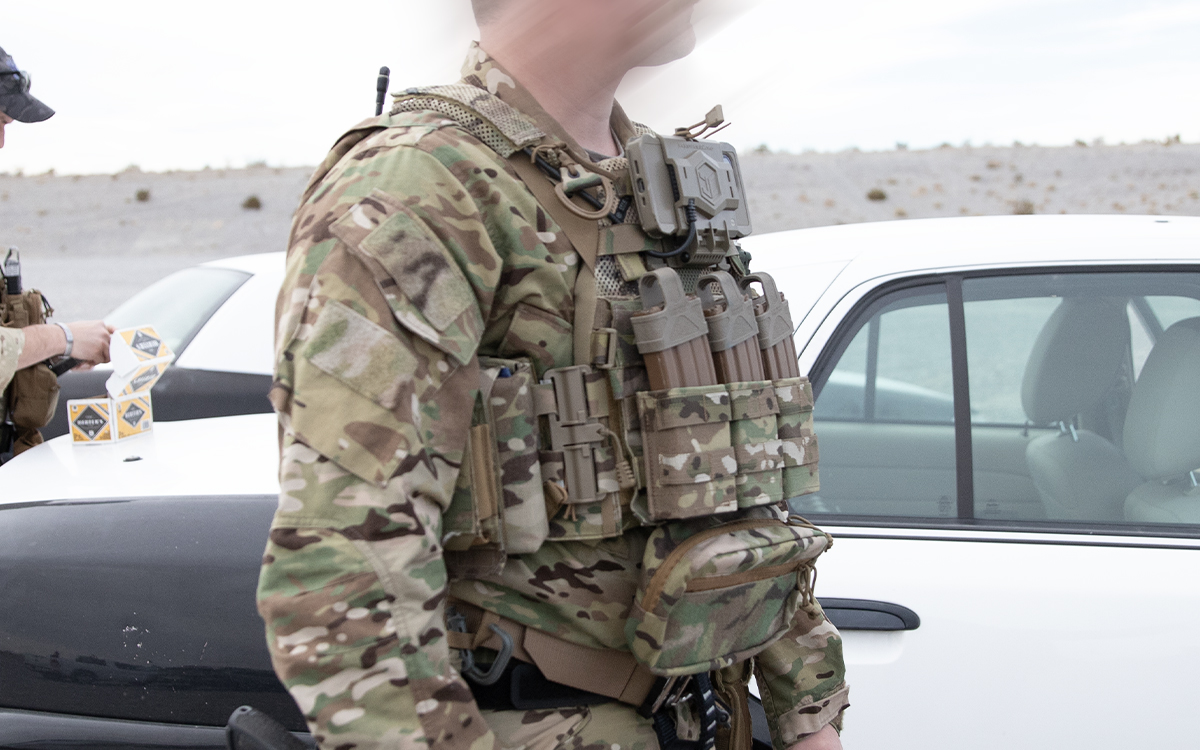
Modern issued military armor runs far heavier than anything in the civilian market, and not because the materials are better. The US Army’s improved outer tactical vest generation weighs about 26 pounds, its successor torso protection system shaved roughly 5 pounds off that.
Add a helmet, plates, and attached equipment, and a soldier’s full protective kit commonly lands between 25 and 40 pounds before weapons, ammunition, and a pack.
The reason is coverage, not construction. Military systems armor the neck, shoulders, groin, and sides that civilian setups leave bare, and areal density is unforgiving arithmetic: more square feet of protection at any density is more pounds, every time. A soldier’s vest isn’t a heavier version of a civilian vest. It’s simply much more vest.
Whatever the number on the scale, the number that matters is what it does to you by hour six.
What the Weight Does to You
Each weight regime makes a different promise about time. Soft armor at 3 to 8 pounds is an all-shift proposition, which is why it’s what most officers actually wear for twenty-five years.
Plate systems at 8 to 23 pounds are an hours proposition: manageable for a range day or a callout, punishing across a full day of movement.
Loadouts at 25 to 40 pounds are a mission proposition, built around the fitness to carry them.
The pattern underneath all three: armor that exhausts its wearer eventually stops being worn, and an unworn plate stops nothing.
So the selection rule runs in one direction only. Choose the protection level your threat model genuinely requires, then minimize weight within that level. Never shop the scale first.
A full walkthrough of that decision is in our guide to how to choose body armor, and when you’re ready to compare specific plates, the weights on our body armor plates all follow the numbers you’ve just read.


 Your Cart
 Product Protection from SLD