Three materials, three sets of tradeoffs, and a lot of marketing noise between you and a straight answer. If you are choosing hard rifle armor, the material decides almost everything that matters: how much it weighs at hour six, what threats it can actually stop, how long it lasts, and what happens to the bullet after the plate does its job. Here is the honest comparison, from a manufacturer that does not sell all three.
| Material | Weight (10×12) | Protection ceiling (NIJ 0101.07) | Multi-hit | Lifespan | Spall risk | Relative cost |
| Steel | ~8 to 10 lbs | RF1 (standard rifle) | Excellent | 15 to 20 yrs | High (needs mitigation) | Lowest |
| Polyethylene (UHMWPE) | ~3 to 5 lbs | RF1 (standalone) | Very good | ~5 to 10 yrs | None | Mid to high |
| Ceramic (usually hybrid) | ~5 to 8 lbs | RF3 (armor-piercing) | Good (not same spot) | ~5 to 7 yrs | None | Highest |
There is no single best plate material. There is the right material for your threat, your weight tolerance, and your budget, and two facts should drive the decision more than any other: steel’s spall and polyethylene’s protection ceiling. Everything below explains why. If you are still deciding whether you even need a plate carrier, start with what a plate carrier is, then come back.
How a Hard Plate Stops a Rifle Round
A rifle round carries far more energy than a handgun round, which is why soft armor alone does not stop rifle fire and why you need a hard plate.
Each material defeats the round through a different mechanism, and those mechanisms are the entire reason the three plates behave so differently.
Steel blocks and deflects the round off a hard, rigid face. Polyethylene catches it, the fibers deforming and gripping the bullet to bleed off its energy.
Ceramic fractures on impact, shattering to blunt and disperse the round before a composite backer catches what is left.
Every one of those mechanisms creates a different consequence for weight, for how many hits the plate can take, and for what happens to the bullet’s fragments. Keep that in mind, because it explains every tradeoff in this guide. For the broader split between soft and hard protection, see soft armor versus hard armor.
Start with the oldest and cheapest option, because it is also the one with the most important catch.
Steel Plates
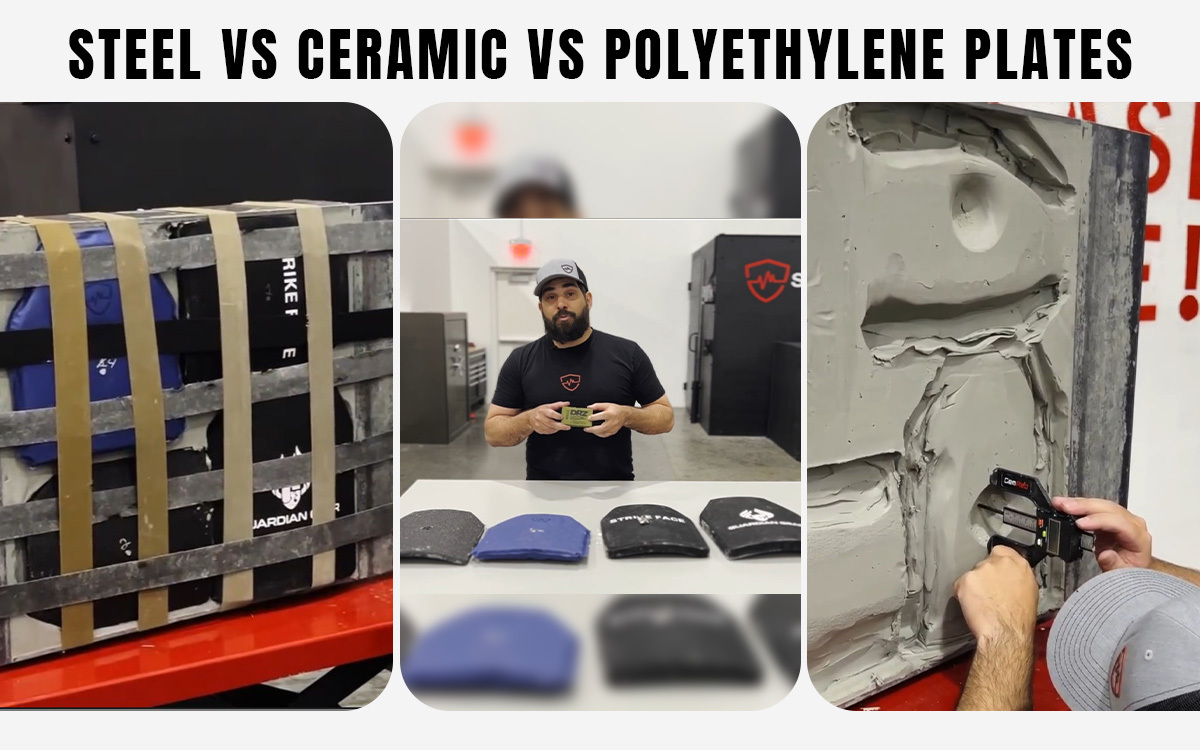
Steel earns its reputation honestly on several fronts. It is the cheapest rifle armor you can buy. It is extremely durable, shrugging off rough handling that would compromise other materials.
It takes multiple hits without losing integrity, including repeated strikes to the same area. It has the longest shelf life of any plate material, commonly 15 to 20 years. And it is thin, usually a quarter inch or so.
For a fixed defensive position, a vehicle, or controlled training where weight is not a concern, those are real advantages, and anyone who tells you steel has no merits is selling you something.
Now the catch the low price hides. When a bullet strikes a steel plate, it does not disappear. It fragments on that hard face, and those fragments deflect outward, spraying laterally and upward toward your neck, your face, and your arms.
This is spall, and it is the single most important thing to understand about steel armor.
Manufacturers apply an anti-spall build-up coating to catch fragments, and a good one helps, but it reduces the hazard rather than eliminating it, and it adds weight and thickness to a plate that was already the heaviest option.
The plain version: a steel plate can stop the bullet and still wound you with the bullet’s own fragments if it is not properly mitigated.
There is a second cost. Steel is rigid, so even a clean stop transfers significant force into your chest. A plate that keeps a round out of your body can still crack ribs or worse through sheer blunt trauma.
None of this makes steel worthless, but it is why most major armor makers have moved away from steel for wearable armor, and it is why Safe Life Defense does not make steel plates at all. We have no stake in steel, which is part of why this assessment is straight.
If steel’s problem is what it does to the bullet, polyethylene was engineered to solve exactly that. It just trades the problem for a different limit.
Polyethylene (UHMWPE) Plates
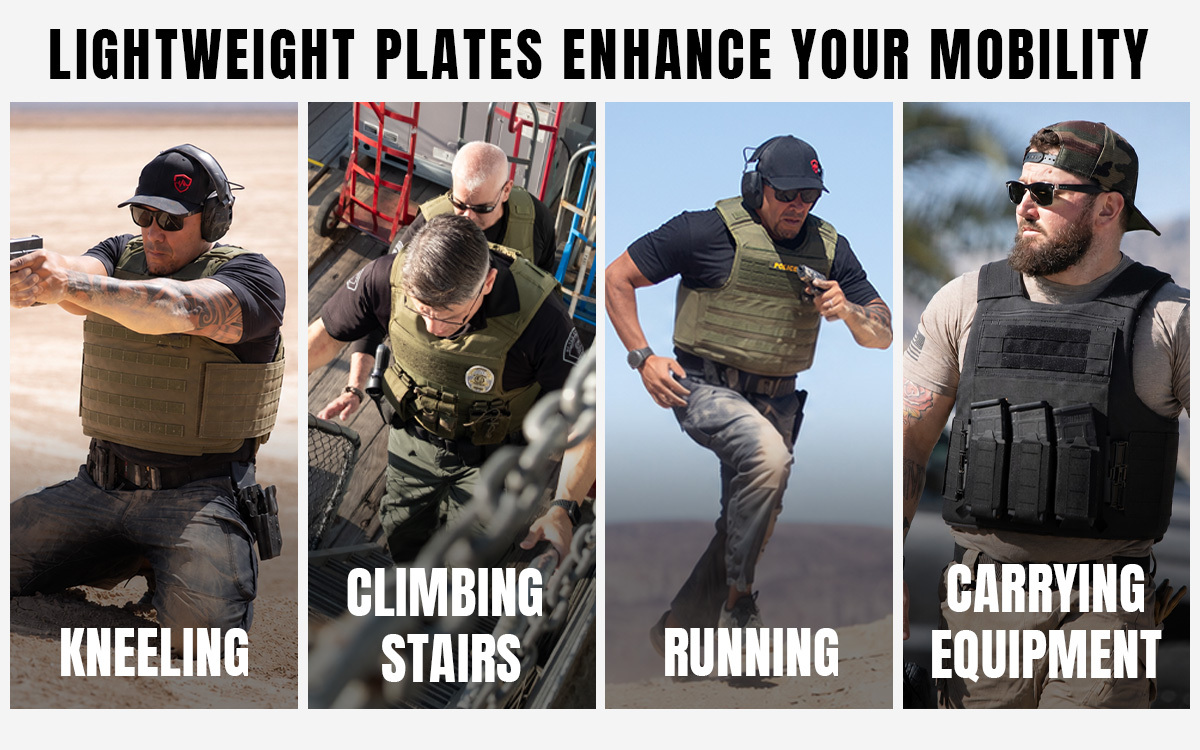
Polyethylene armor, made from ultra-high-molecular-weight polyethylene (UHMWPE, or just poly), is the lightest rifle armor by a wide margin, typically 3 to 5 pounds for a 10×12 plate.
Over a long day, that weight difference is not a luxury, it is the difference between finishing your shift sharp and finishing it fatigued.
Poly produces no spall, because it catches and deforms the round rather than deflecting it. It floats, which makes it the natural choice for maritime and waterborne use. And it handles multiple hits well.
For a wearer whose priority is weight and all-day wearability against standard rifle threats, poly is genuinely compelling.
The limit is the part the marketing tends to bury. A standalone polyethylene plate reliably reaches NIJ RF1, meaning it stops 7.62x51mm M80 ball, 5.56mm M193, and 7.62x39mm mild steel core.
But pure standalone poly generally cannot stop the 5.56mm M855 “green tip,” which carries a hardened steel penetrator tip, and it cannot reach RF3 against .30-06 M2 armor-piercing rounds.
The physics works against it: an armor-piercing round at those velocities generates heat approaching the material’s softening point faster than the fiber matrix can contain it.
The rule is simple. If your threat includes green tip or armor-piercing ammunition, standalone polyethylene is not your material.
Two more honest caveats. Poly can show higher backface deformation than other materials, the dent driven toward your body behind the plate, so a trauma pad is a wise addition.
And it is sensitive to heat and prolonged UV, with sustained high temperatures degrading the material over time, which is why service life is commonly rated around 5 to 10 years.
One red flag to carry with you: any plate advertised as “polyethylene Level IV” without a documented ceramic strike face is making a claim the material cannot support on its own. Verify it.
Where poly hits a ceiling, ceramic was built to break through it, at the cost of weight, money, and a real handling tax.
Ceramic Plates
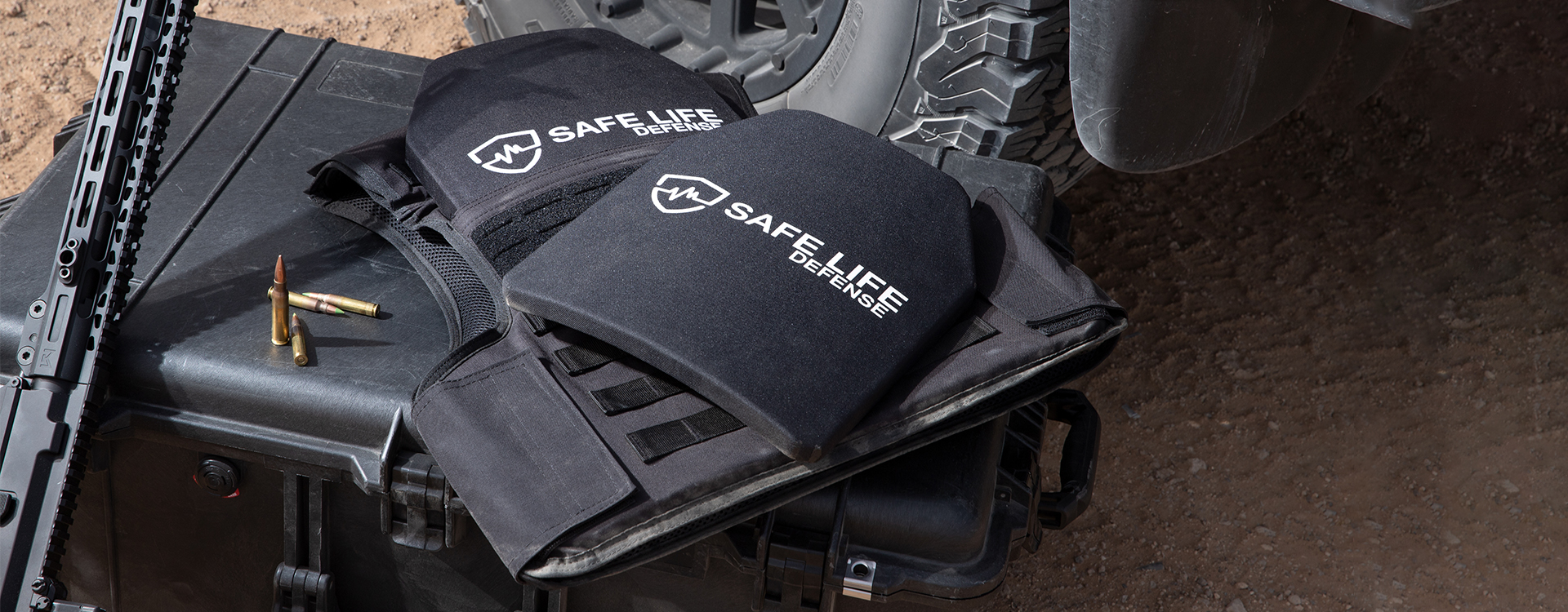
Ceramic is the protection ceiling champion. It is the only material that reliably reaches NIJ RF3, stopping the .30-06 M2 armor-piercing round, and it does so at a weight far below what steel would need to attempt the same job, typically 5 to 8 pounds for a 10×12. If maximum protection against armor-piercing threats is the requirement, ceramic is the answer, full stop.
Here is the part almost every buyer gets wrong: most plates sold as “ceramic” are not pure ceramic at all. They are hybrids.
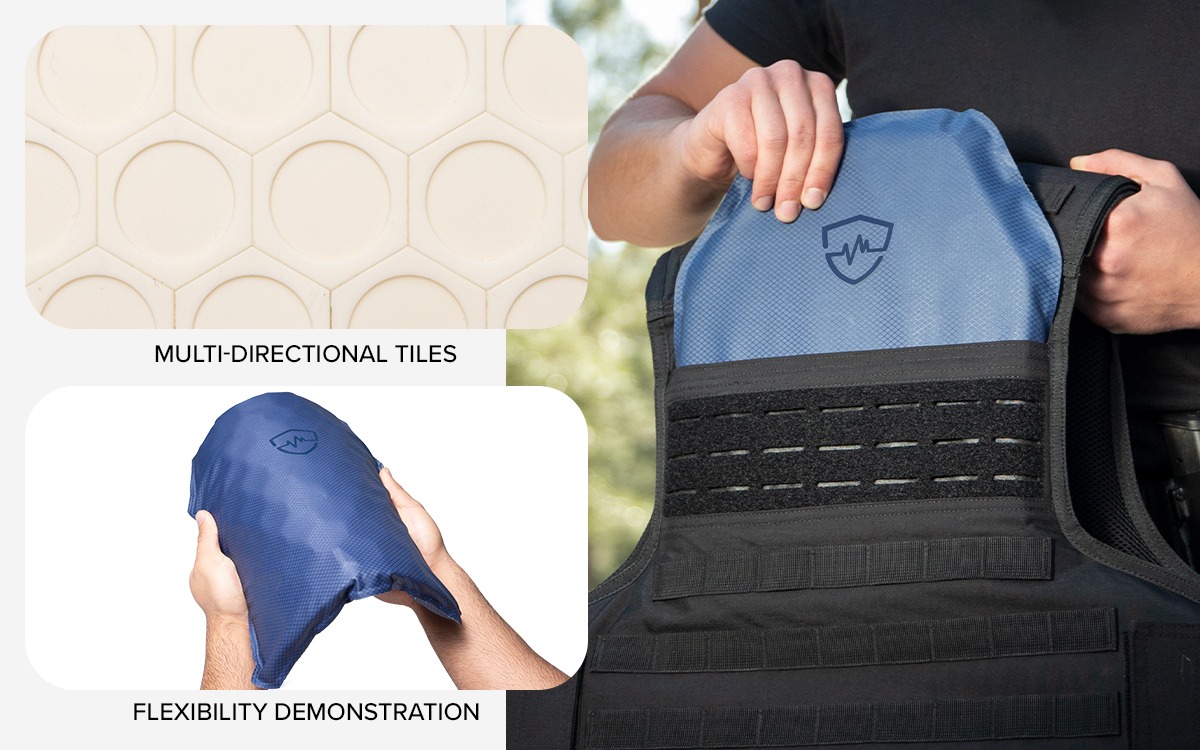
A hard ceramic strike face (alumina, silicon carbide, or boron carbide) is bonded to a polyethylene or composite backer.
The ceramic shatters and disperses the incoming round, and the backer catches the fragments and the remaining energy while controlling backface deformation.
The military’s ESAPI plate is exactly this design, a silicon carbide strike face over a polyethylene backing.
So the real choice in the field is frequently not pure ceramic versus pure poly. It is a system that uses both materials to do what neither does alone.
The tax you pay for that protection is fragility and a clock. Ceramic works by fracturing, and that same brittleness makes it vulnerable off the range.
A drop onto a hard surface, even one that leaves no visible mark, can crack the internal structure and quietly compromise the plate.
That is why handling history matters, why dropped plates should be inspected or retired, and why a used ceramic plate of unknown history should be treated as suspect.
Ceramic also has a finite shelf life, commonly 5 to 7 years dated from manufacture, and it can degrade with rough handling and repeated wet and dry cycling. It can take multiple hits, but not repeatedly to the same spot, where the strike face has already shattered.
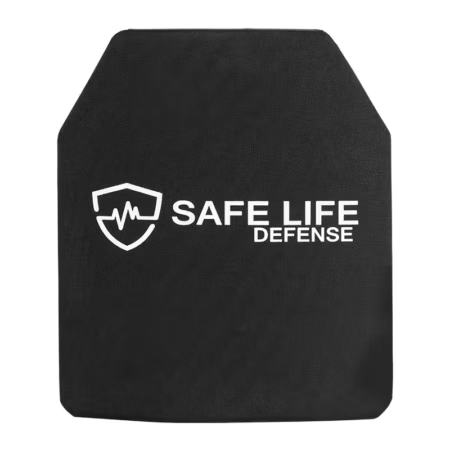
Safe Life Defense Level IV ICW ceramic plates reach RF3, armor-piercing protection, when paired with a soft armor backer. That “ICW” matters, and it deserves its own quick explanation.
Standalone vs ICW: A Distinction You Cannot Skip
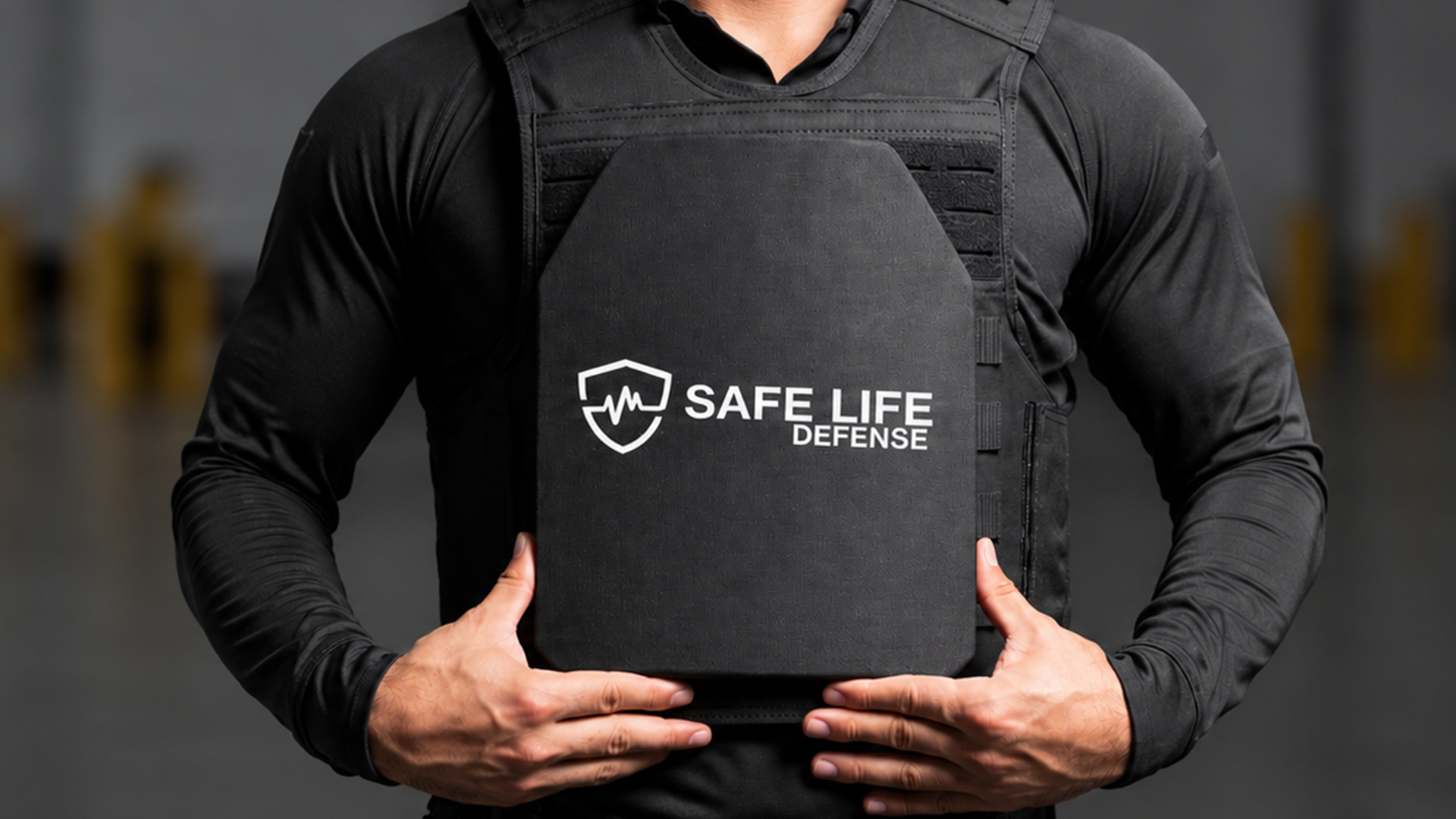
Plates come in two configurations, and confusing them is dangerous. A standalone plate achieves its full rating on its own.
An ICW plate, meaning “in conjunction with,” reaches its rated level only when worn over a soft armor backer that does part of the work. Many lighter ceramic and poly plates are ICW by design, which is how they stay thin and light.
The safety rule follows directly: an ICW plate worn without its soft backer is not rated and can fail at its labeled level.
Before you trust any plate’s number, confirm whether it is standalone or ICW, and if it is ICW, never run it without the backer it was tested with.
With that clear, here is the comparison mapped to the standard that actually defines what each material stops.
The Comparison That Matters, Mapped to NIJ 0101.07
In late 2023 the National Institute of Justice published NIJ Standard 0101.07, which replaced the familiar Roman-numeral levels with descriptive tiers and moved the exact test threats into a companion specification, NIJ Standard 0123.00. For rifle armor, the levels that matter are RF1, RF2, and RF3.
RF1 (the rough equivalent of the old Level III) is tested against 7.62x51mm M80 ball, 7.62x39mm mild steel core, and 5.56mm M193. RF2 is brand new, and it is the official replacement for the unofficial “Level III+” label: it covers everything RF1 does plus the 5.56mm M855 green tip with its steel penetrator.
RF3 (the old Level IV) is tested against a single .30-06 M2 armor-piercing round. One nuance worth knowing, because it surprises people: the Level IV and RF3 rating is built around armor-piercing rounds and was not historically tested against M855 green tip, which is precisely the gap RF2 was created to close.
Treat the old-to-new crosswalk as approximate, because the test rounds define the levels, not the names.
Now map the materials to those tiers. Standalone polyethylene generally lives at RF1. Steel typically sits at RF1 as well and pays for it in weight and spall. Ceramic, usually as a hybrid, is what gets you to RF2 and RF3.
And remember that “Level III+” was never an official NIJ rating, so any plate wearing that label is making a manufacturer’s claim you should verify against the current standard.
For the full breakdown of every tier, see our guides to NIJ protection levels.
Then weigh the rest. On true cost, steel is cheapest up front, but you pay the weight and the spall risk on every single wear, and it lasts 15 to 20 years.
Ceramic costs the most and lasts roughly 5 to 7 years. Poly sits between them on price with a service life around 5 to 10 years and a heat sensitivity to plan around.
On blunt trauma, rigid steel transfers the most force into your body, poly can show the most backface deformation (plan on a trauma pad), and ceramic disperses energy by design.
One caveat that applies to all of them: an NIJ level is a laboratory rating against specific test rounds at set velocities, not a guarantee against every real-world load, barrel length, or angle, and “special threat” testing is separate from NIJ certification.
When a rating is the difference between safe and not, verify it on the NIJ Compliant Products List.
All three of these are rigid plates, and rigid is not the only way to stop a rifle round. Here is the option the three-way debate usually forgets.

The Fourth Path: Flexible Rifle Armor
The whole steel-versus-ceramic-versus-poly framing quietly assumes rifle armor has to be a stiff plate. It does not.
Flexible rifle armor uses small composite tiles that bend with your body, wrapping your entire torso instead of covering only the rectangle a plate protects. It produces no spall. It conceals and wears like soft armor.
And it can be rated to defeat green-tip-class threats while keeping blunt-force protection comparable to hard plates.
The honest tradeoff: it is not how you reach RF3 armor-piercing protection, where ceramic still rules.
This is where Safe Life Defense FRAS, Flexible Rifle Armor, fits the conversation. Built from flexible mosaic tiles, FRAS provides full front, rear, and side coverage and is rated to defeat .223, 5.56 including green tip, and 7.62×39, with blunt-force protection comparable to hard plates and no spall, at roughly 16 pounds for two full panels.
SLD positions FRAS in the RF2 tier, and it has been tested by an independent lab to defeat those threats.
For most wearers weighing comfort, coverage, and intermediate rifle protection, it is worth knowing the rigid plate is not the only answer.
So which one belongs on your body? It comes down to your threat, your weight tolerance, and your budget, in that order.
Which Should You Choose?
One last reframe on budget. The cheapest plate is rarely the cheapest decision. Once you price in the weight you carry every wear, the spall risk, and the replacement cycle, “affordable” steel and “expensive” ceramic can trade places.
Buy for your threat and your body first, then your wallet. If you need help matching a plate to your torso once you have picked a material, our plate carrier sizing guide walks you through it.
Match the Material to the Mission
There is no universally best plate material. There is the right one for your threat, your body, and your budget, and the two facts that should drive the decision are steel’s spall and polyethylene’s protection ceiling.
Get those straight and the choice gets simple: ceramic when you need maximum, armor-piercing protection, flexible rifle armor when coverage and all-day comfort matter most, and polyethylene when weight is everything and the threat is standard rifle fire.
Whatever you choose, choose it for the mission, not the marketing. Explore SLD Level IV ICW ceramic plates, FRAS flexible rifle armor, and the full plates collection, all backed by our Fit and Incident Guarantee.

 Your Cart
 Product Protection from SLD